Trekking in Cusco: A Complete Breakdown of the 3 Most Epic Routes in the Andes
Trekking in Cusco is the definitive experience that transforms a simple visit to Peru into a spiritual odyssey. Beyond being a city on the South American map, Cusco is the pulsating heart of the Andes, a place where geography and history collide in ways the modern mind is only beginning to comprehend.
Travelers often arrive drawn by the postcard image of Machu Picchu, the Lost City of the Incas, but they soon discover that the true magic lies not only in the final destination but in the arduous and transformative process of getting there. Trekking in Cusco is not merely a sport or a vacation activity; it is a ritual. It is walking in the footsteps of a civilization that understood engineering as an act of worship toward nature.
For the contemporary adventurer, the Cusco region represents the ultimate challenge and the ultimate reward. Situated at an altitude that tests the lungs and surrounded by peaks that tear at the sky, the ancient capital of the Tahuantinsuyo serves as the base camp for some of the most spectacular foot expeditions on the planet. Here, every step is a negotiation with altitude, and every panoramic view is a reward earned with sweat and determination.
In this exhaustive guide, we will break down not only the region’s three most iconic treks—The Classic Inca Trail, the Salkantay Trek, and Rainbow Mountain—but also the philosophy behind them, the necessary preparation, and why, year after year, thousands of souls prioritize trekking in Cusco over any other travel experience. They come seeking more than a photo; they are seeking a connection with the earth and with themselves.
The Andean Stage: Why is Cusco the Mecca of Hiking?
Before lacing up our boots, it is crucial to understand the terrain we are dealing with. The geography of the Cusco region is dramatic, violent, and beautiful. We are talking about the Andes, the longest continental mountain range on Earth, acting as a spine that runs down South America. In this specific stretch of southern Peru, the topography creates unique microclimates that shift in a matter of hours, making trekking in Cusco a dynamic experience unlike any other.
A hiker can start the day tiritando (shivering) under the shadow of a glacial peak at 4,000 meters and end the afternoon surrounded by wild orchids, humid air, and hummingbirds on the edge of the Amazon jungle. This rapid transition between ecological floors is what defines the biodiversity of the region and makes every day on the trail a surprise.
The Philosophy of the “Qhapaq Ñan”
To understand the routes, one must understand their creators. The Incas did not view roads simply as a means of transport from Point A to Point B. The Qhapaq Ñan (the Great Inca Road network) was a tool for political and spiritual integration. When you commit to trekking in Cusco today, you are utilizing the very same infrastructure that the Chasquis (imperial messengers) used centuries ago to run messages across the empire. This road network, now a UNESCO World Heritage Site, is a proeza (feat) of engineering that crosses deserts, mountains, and jungles without disrupting the natural balance. Walking through Cusco is, literally, walking on living history.
The “Apus”: Mountains with Spirit
In the Andean worldview, mountains are not inanimate objects of rock and ice; they are Apus, protective deities that watch over the inhabitants, control the weather, and influence the harvest. Peaks like Ausangate, Salkantay, and Veronica are considered powerful, living spirits. For the local trekker and the indigenous population, climbing a mountain implies asking for permission and showing respect. Adopting this mindset not only enriches the cultural experience but fosters a form of tourism that is more conscious. When trekking in Cusco, you are a guest in the home of these giants.
1. The Classic Inca Trail: The Historical Pilgrimage
(Suggested duration: 4 days / 3 nights)
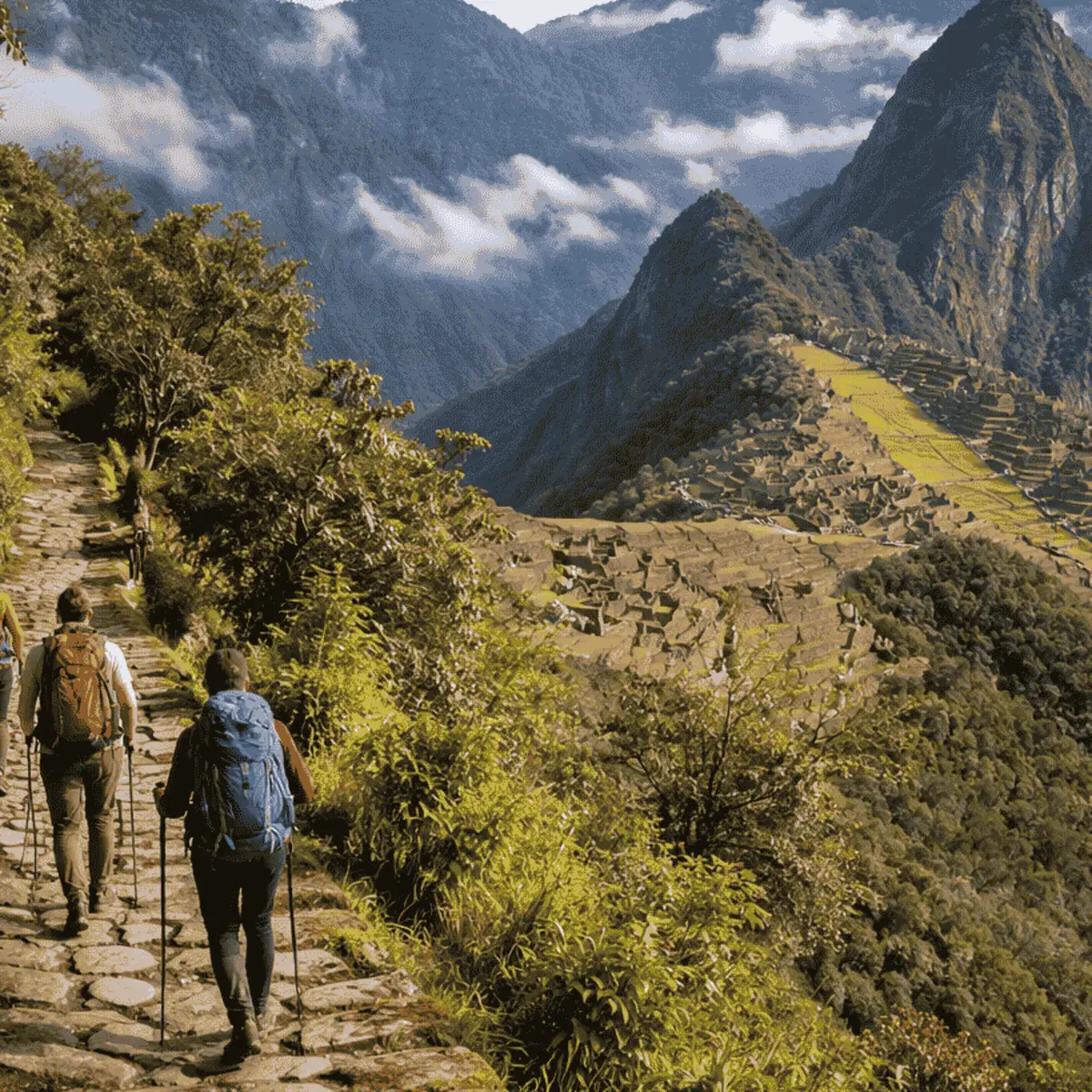
If there is one route that defines the concept of trekking in Cusco, this is it. The Classic Inca Trail to Machu Picchu is much more than a dirt path; it is an open-air masterclass in history, astronomy, and hydrology. Unlike other routes that focus purely on the landscape, the Inca Trail is an immersive journey into 15th-century architecture and urban planning. It is the only route that ends directly at the Sun Gate (Inti Punku), offering the original, royal entrance to the citadel.
The Journey: A Day-by-Day Breakdown
Day 1: The Awakening The route generally begins at Kilometer 82 of the railway line, specifically at a place called Piscacucho. From the very first moment, the hiker crosses the Urubamba River, a vital artery for the Sacred Valley. The terrain is relatively gentle, serving as a warm-up. You will pass massive archaeological sites like Llactapata, an agricultural station that fed the empire. It is the day to adjust your gear, find your breathing rhythm, and let your body understand that you have begun your trekking in Cusco adventure.
Day 2: The Test of Will This is the day feared and respected by all. The ascent toward the Warmiwañusca Pass (Dead Woman’s Pass) is brutal but rewarding. You will climb from 3,000 meters to 4,215 meters above sea level. Here, the vegetation disappears, replaced by the Ichu (Andean straw). Oxygen is scarce, lungs burn, and willpower is put to the test. However, the sense of achievement upon reaching the summit is indescribable. It is the highest point of the trail and the moment where many hikers realize they are stronger than they thought.
Day 3: The Cloud Forest After overcoming the highest pass, the landscape changes drastically. This is often cited as the most beautiful day of trekking in Cusco. You descend into the tropical cloud forest. The trail becomes a stone staircase carved into cliffs. Sites like Sayacmarca and Phuyupatamarca appear amidst the mist like castles in the air. The biodiversity explodes; you will see begonias, bromeliads, and perhaps the spectacle bear if you are lucky.
Day 4: The Glory The final day begins before dawn, often around 3:30 AM. The goal is to reach the Sun Gate with the first rays of light. The trek is fast-paced, fueled by adrenaline. Arriving at Inti Punku and seeing Machu Picchu revealed below as the mist clears is a vision that has brought even the most experienced travelers to tears. It is the culmination of the pilgrimage.
Why Choose It?
Exclusivity is high due to strict government regulations that limit daily access to 500 people (including porters and guides) to preserve the trail. This requires reservations months in advance—sometimes up to six or eight months. It is the premier option for those seeking the classic, historical, and mystical experience of trekking in Cusco.
2. Salkantay Trek: The Wild Route
(Suggested duration: 5 days / 4 nights)
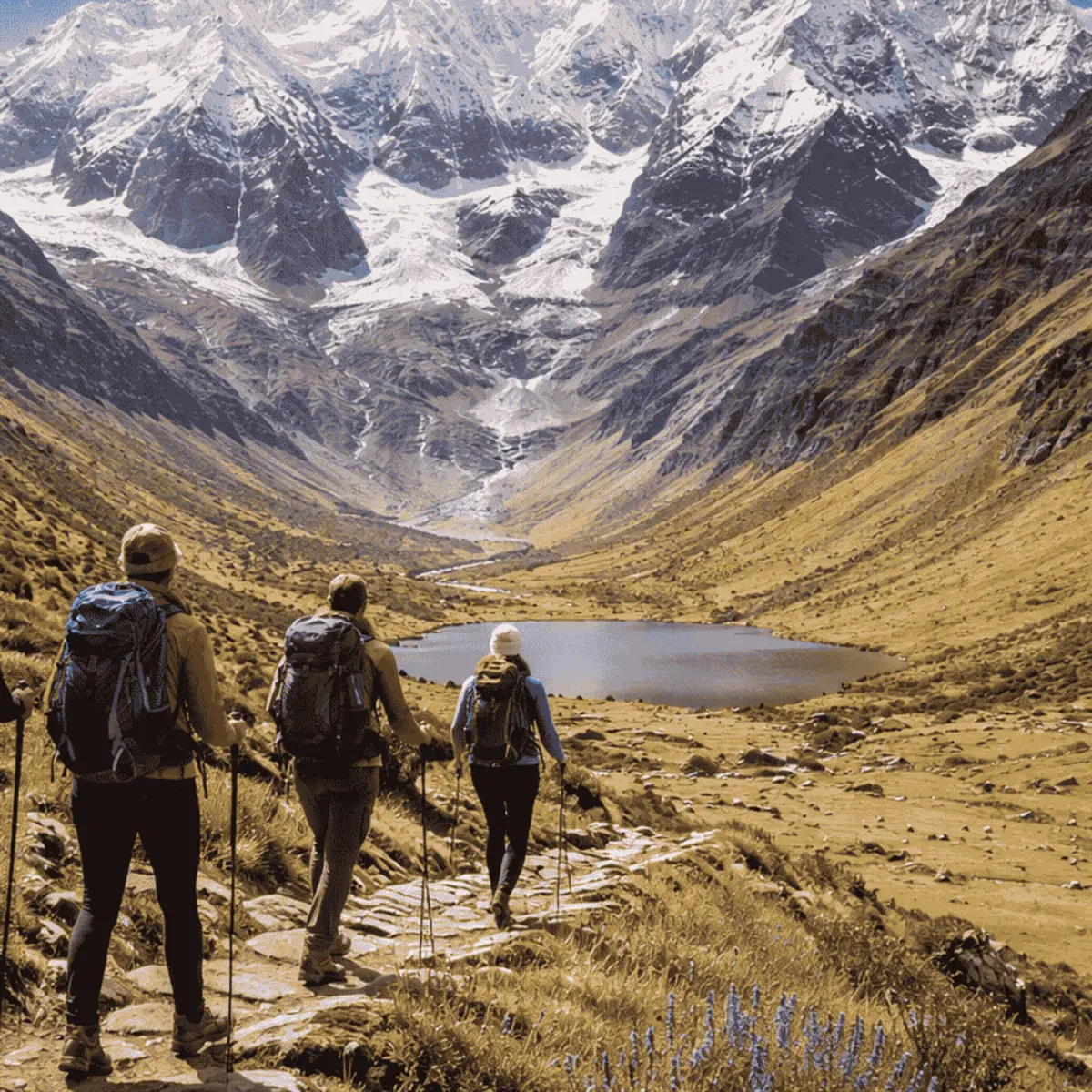
If the Inca Trail is the route of history, the Salkantay is the route of extreme geography. Named by National Geographic Adventure magazine as one of the 25 best treks in the world, this is the preferred alternative for those seeking fewer crowds, raw nature, and a physical challenge that surpasses the classic trail. For many experts, this is the future of trekking in Cusco.
Ecological Contrasts: Fire and Ice
What makes the Salkantay unique is the violence of its contrasts. There is no smooth transition here. In the first few days, you find yourself at the foot of the imposing Mount Salkantay (6,271 m.a.s.l.), whose name in Quechua translates to “Savage Mountain.” The cold is intense, penetrating the bones. The landscape is lunar, dominated by grey rocks, white ice, and turquoise lagoons like the famous Humantay Lake, a jewel that has become an icon of trekking in Cusco.
However, as you descend toward the Amazon basin on the third day, the scenery transforms completely. The ice gives way to moss, the moss to giant ferns, and soon you find yourself walking among coffee plantations, passion fruit fields, and avocado trees, surrounded by flocks of parrots and roaring waterfalls. This journey from perpetual snow to tropical heat in a matter of 48 hours is an overwhelming sensory experience that defines the Salkantay.
The Hiker’s Experience
The Salkantay does not require permits as strict as the Inca Trail, offering a greater sense of freedom and spontaneity. The accommodation options have also evolved; while you can camp in tents, many operators now offer glass domes or “hobbit houses,” allowing you to sleep under the Milky Way while protected from the elements.
- The Critical Point: The Salkantay Pass, at 4,630 meters high, is the highest point of the trek. It is significantly higher than the peak of the Inca Trail, requiring serious acclimatization. Standing at the foot of the Apu Salkantay is a humbling moment.
- The Finish: The trek ends in the town of Aguas Calientes, from where you access Machu Picchu. Although you do not enter through the Sun Gate, the satisfaction of having traversed the “Savage Mountain” grants a different, perhaps more rugged, perspective of the region.
Who is this route for?
This route is for the lover of pure nature, the landscape photographer, and the hiker who prefers the solitude of the mountain over constant historical explanation. It is physically more demanding than the Inca Trail, but for many, the visual reward makes it the best choice for trekking in Cusco.
3. The Rainbow Mountain (Vinicunca): The Geological Phenomenon
(Suggested duration: 1 full day)
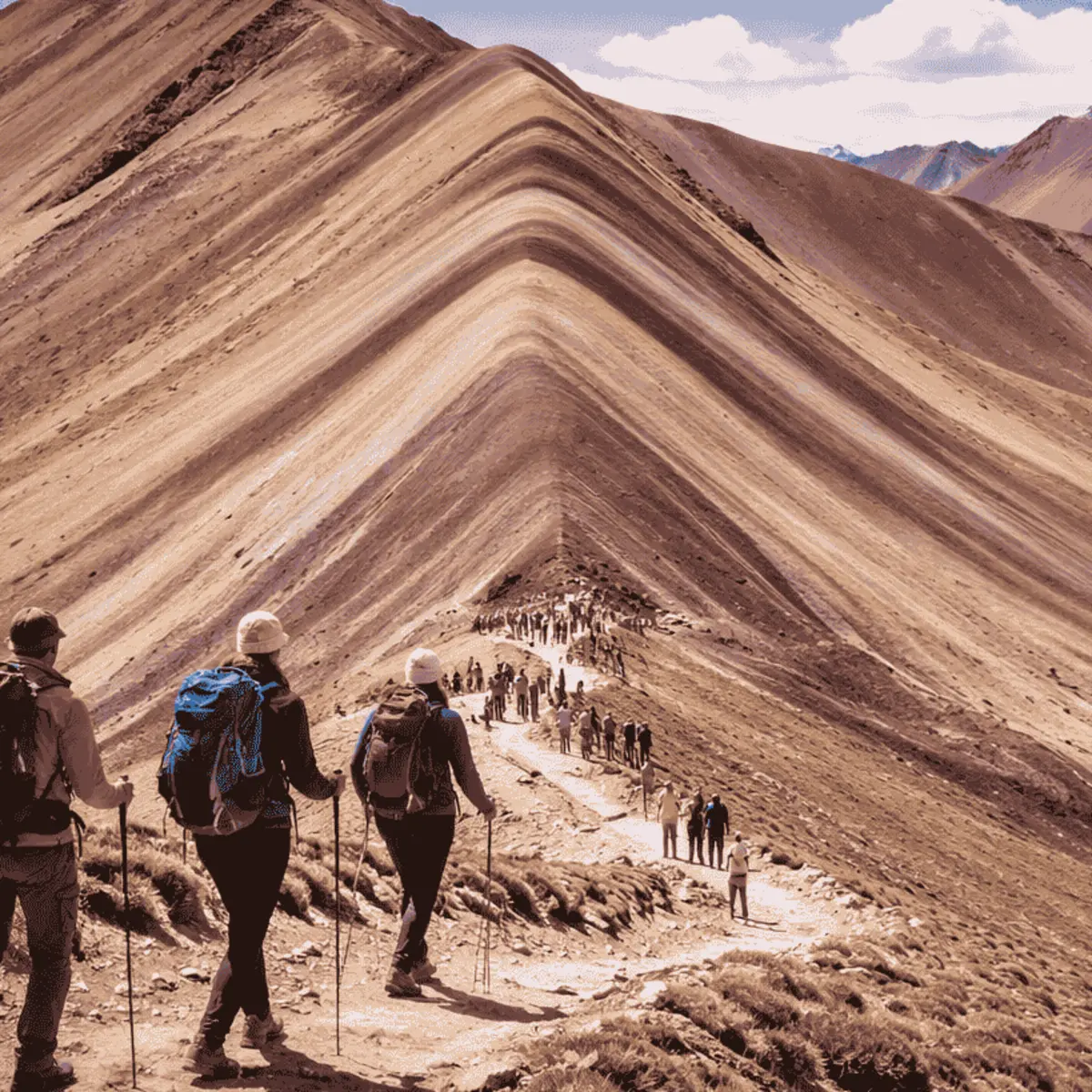
A decade ago, this route barely existed on tourist maps. It was covered by snow and ice. Today, Vinicunca is almost as iconic as Machu Picchu itself. Located in the Vilcanota mountain range, this mountain is a geological whim that looks like it was painted by the hand of God. It has become an essential stop for anyone interested in trekking in Cusco.
The Science Behind the Colors
The striation of colors is not magic; it is pure mineralogy exposed by glacial melting due to climate change.
- Red: Clays and claystones (iron oxide).
- Pink: Clay, mud, and sand.
- White: Quartz sandstone and marls.
- Green: Phyllites and clays rich in ferromagnesian minerals.
- Brown: Fanglomerate composed of rock with magnesium.
- Mustard Yellow: Calcareous sandstones rich in sulfurous minerals.
The Challenge of Extreme Altitude
Do not be fooled by the fact that it is a day trip. In terms of oxygenation, it is the most brutal of the three mentioned here. The summit sits at 5,200 meters (17,060 feet) above sea level. At this altitude, oxygen is approximately 50% of what is found at sea level. Every step feels heavy, like walking with lead weights on your ankles, and the heart beats hard against the ribs. It is the ultimate test for short-term trekking in Cusco.
The path itself is about 5 to 6 kilometers of constant ascent. The landscape is surreal: the Apu Ausangate, the highest mountain in the Cusco region, stands snowy and majestic on the horizon, contrasting sharply with the reds and ochres of the valley.
The Red Valley: The Hidden Gem
A secret that many omit due to fatigue is the “Red Valley,” located right next to Vinicunca. It is a Martian landscape, completely red due to intense iron oxide soil. It offers a visual experience even more striking than the Rainbow Mountain itself and hosts far fewer tourists. Including the Red Valley turns a standard tour into a premier trekking in Cusco experience.
Technical Preparation: The Art of Walking in the Andes
Success on these routes depends not only on physical fitness but on strategy and intelligent preparation. The mountains do not care how fit you are at sea level; they demand respect. Here we detail the fundamental pillars for a successful expedition when trekking in Cusco.
1. The Science of Acclimatization
“Soroche,” or altitude sickness, does not discriminate. It affects Olympic athletes and smokers alike. It occurs when the body cannot get enough oxygen from the low-pressure air. Ignoring this is the number one reason for failure when trekking in Cusco.
- The Golden Rule: Spend at least 48 hours in the city of Cusco (3,400 m) before starting any demanding trek. Use this time to visit local museums or walk around the Plaza de Armas gently.
- Hydration: At altitude, the body loses water faster through respiration because the air is incredibly dry. You must drink between 3 and 4 liters of water a day.
- Diet: Digestion slows down significantly at altitude. Consume complex carbohydrates (quinoa, rice, potatoes) and avoid heavy fats and alcohol during the first few days.
- Natural Aids: The coca leaf is not a drug; it is an ancestral medicine used for millennia. Chewing it or drinking it as tea (mate de coca) helps dilate blood vessels and improve oxygenation. It is the secret weapon for trekking in Cusco.
2. The Layering System
Andean weather is bipolar and unpredictable. You can get severe sunburn at 11:00 AM and suffer potential hypothermia at 4:00 PM if you are not prepared. Forget thick, single coats; the key to trekking in Cusco is layers.
- Base Layer: Synthetic material or merino wool (never cotton) that wicks sweat away from the skin. If you sweat in cotton and then stop moving, you will freeze.
- Mid Layer: A fleece or light down jacket to retain body heat.
- Outer Layer: A high-quality windproof and waterproof jacket (Gore-Tex or similar). Rain can come out of nowhere.
- Extremities: Convertible trekking pants are useful. Hiking boots must be waterproof and, crucially, “broken in” before you arrive. Never wear brand new boots on the Inca Trail.
3. Physical Training
You do not need to be an Ironman, but you need endurance. The best training for trekking in Cusco is hiking. Find hills or stairs in your hometown. Practice carrying a backpack with some weight. Focus on cardio and leg strength (squats and lunges).
The Best Season: When to Go?
Cusco has two marked seasons, and choosing one or the other radically changes the experience of trekking in Cusco.
Dry Season (May to October) This is the tourist favorite. The days are crisp and sunny, the views are crystal clear, and the chance of rain is minimal. However, the nights are freezing (often dropping below zero degrees Celsius). June, July, and August are the busiest months. If you want those perfect blue-sky photos, this is the time.
Rainy Season (November to April) During these months, the trails can be muddy and slippery, making trekking in Cusco more challenging. January and February are the rainiest months (the Inca Trail closes completely in February for maintenance). However, the advantage is that the landscape turns a phosphorescent green, the orchids are in bloom, there are fewer people, and nighttime temperatures are milder. For the adventurous soul who doesn’t mind getting wet, this season offers a mystical atmosphere.
Impact and Sustainability: The Conscious Traveler
By entering these natural sanctuaries, we assume a profound responsibility. The boom of tourism in Cusco has brought economic development, but also environmental challenges. Sustainable trekking in Cusco is no longer an option; it is a necessity.
Respect for Porters and Horsemen
On the Inca Trail, the porters (often called “The Green Machine” or “The Red Army” depending on their uniforms) are the true superheroes of the Andes. They carry camping gear, food, tables, and tents on their backs, running to arrive before you and have everything ready for lunch. When booking your trekking in Cusco package, ensure you hire agencies that respect maximum weight laws (25kg) and pay fair, living wages. Treat them with dignity, share a conversation, and tip generously. Without them, the adventure would be impossible.
Leave No Trace (LNT)
The rule is simple: “Take nothing but photos, leave nothing but footprints.” Carry all your trash back to the city with you. Do not pick flowers or disturb local wildlife (vizcachas, condors, llamas). The ecosystems you traverse during your trekking in Cusco expedition are fragile.
Cultural Interaction
When passing through local communities, especially on routes like Salkantay, Lares, or Ausangate, remember that you are entering people’s homes. Ask for permission before taking photographs of locals, especially children. Buying handicrafts directly from local producers helps sustain their economy and keeps their textile traditions alive.
Conclusion: The Call of the Mountain
Choosing a specific route for trekking in Cusco is not like choosing a hotel or a restaurant. It is choosing what kind of challenge you want to face and what part of yourself you want to discover. The mountains act as mirrors; they reflect our strengths and our weaknesses.
Are you looking for a deep historical connection and the emotional thrill of crossing the Sun Gate following the steps of the Inca emperors? The Classic Inca Trail awaits you with its stone steps and ancient whispers. Do you yearn for the majestic solitude of glaciers, the challenge of high passes, and the exuberance of the virgin jungle? The Salkantay Trek is your route to glory. Do you want to witness a geological rarity that looks like something out of a psychedelic dream and test your physical endurance at maximum altitude? The Rainbow Mountain challenges you to step up.
Whatever your choice, one thing is certain: you will not return home as the same person who left. The Andes have a peculiar way of teaching humility. They make you feel small before the vastness of their granite peaks, but at the same time, they make you feel invincible when you manage to crown a mountain pass with your own legs.
Prepare your backpack, respect the altitude, open your mind to the millennia-old culture, and launch yourself into the adventure. The paths are open, and the mountains, the eternal Apus, are waiting to tell you their secrets. Your journey of trekking in Cusco begins now.
OUR TIKTOK ACCOUNT
BLOG HOME:
https://bestmachupicchutours.com/blog
VISIT OUR SOCIAL MEDIA:
https://www.facebook.com/infocusco