Streets of Cusco: The 5 Stone Jewels That Reveal the Most Fascinating Secrets of the Inca Empire
Cusco is not a city that reveals itself from the window of a tour bus. It is a city that demands the contact of your shoe sole against the stone, the soft panting caused by the altitude, and a contemplative pause at every corner. When travelers arrive in the ancient capital of the Tahuantinsuyo, they often obsess over the great archaeological sites outside the city, forgetting that the true living museum is found within the urban fabric itself. The streets of Cusco are scars of history, lines where the Andean and European worlds collided to merge into a hybrid architecture that has no parallel on the continent.
Walking these stone arteries is like reading a history book under the open sky. In a single wall, you can see the Cyclopean Inca base, the colonial transition, and the republican finish. No two corners are alike. The sunlight, bouncing off the andesite and diorite, creates plays of shadow that have fascinated chroniclers, painters, and photographers for centuries. If you are planning your visit, you should know that walking the streets of Cusco is the most economical, enriching, and visually striking activity you can experience.
In this article, we will break down the history, the hidden charm, and the photographic secrets of the city’s five most legendary thoroughfares. Prepare to discover why getting lost among these walls is finding the very essence of the Andes.
Architecture as a Language: Understanding the Ground You Walk On
Before delving into the five specific routes, it is vital to understand the context. The streets of Cusco are not simple transit routes; they are masterpieces of seismic engineering and urban planning. The original layout of the Inca city was shaped like a puma, and many of the streets we walk today were the “ceques” or imaginary lines that radiated from the Qoricancha toward the four regions of the empire (suyos).
What makes the streets of Cusco unique is the “paradox of persistence.” While in other colonial cities everything previous was destroyed, in Cusco, the Spaniards were forced to use the Inca walls as foundations. Inca engineering was so superior and resistant to earthquakes that it was impossible to tear it down completely. Thus, as you walk, you will notice that the base of the streets has a slight inward inclination (trapezoidal), designed to withstand the movement of the earth. You are walking among stone giants that have survived natural and social cataclysms.
1. Calle Hatun Rumiyoc: The Palace of the Great Rock
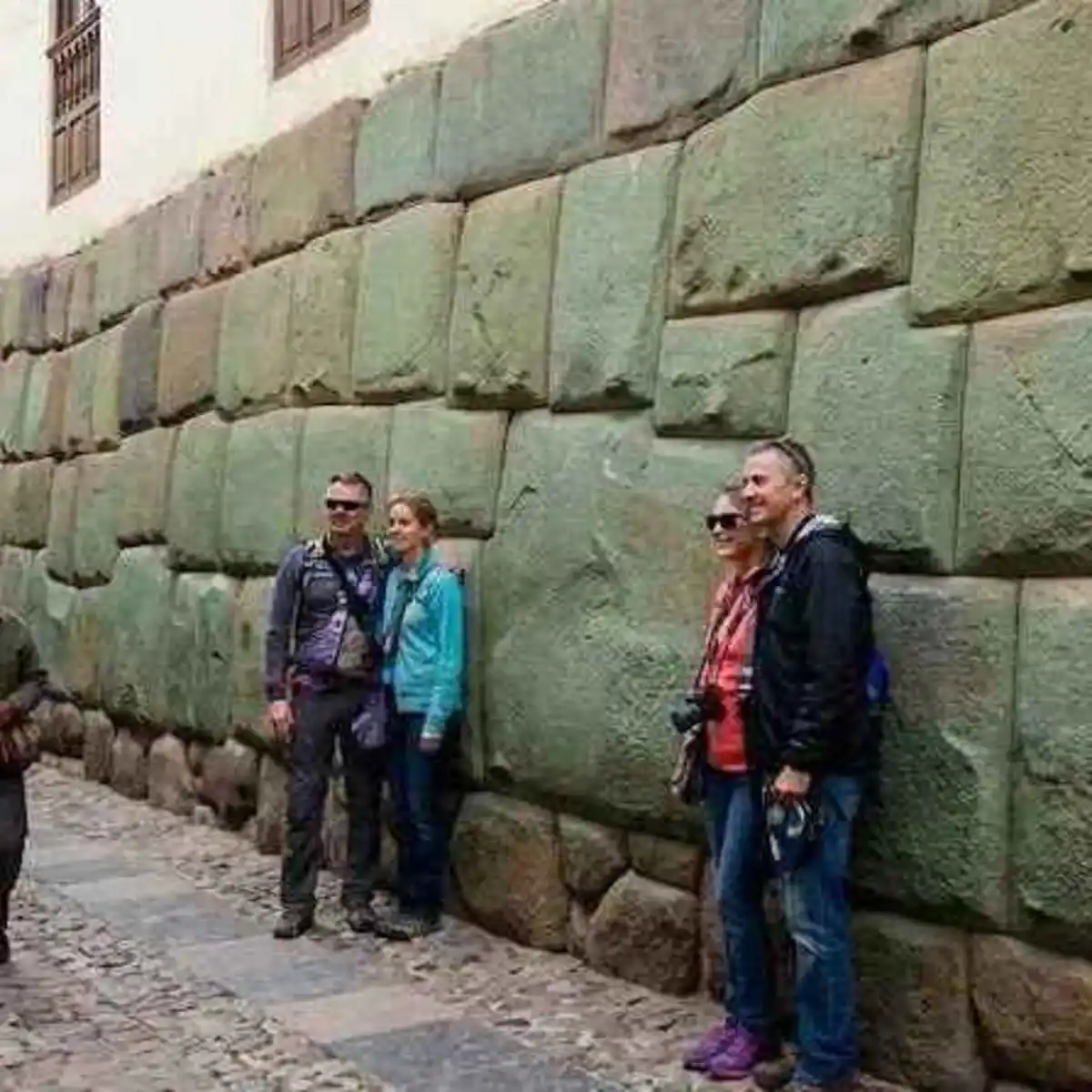
If a queen had to be chosen among all the streets of Cusco, it would undoubtedly be Hatun Rumiyoc. Its name in Quechua means “Of the Great Rock,” and it lives up to its title by being the home of one of the most famous pieces of masonry in the world: the 12-Angled Stone.
History and Meaning
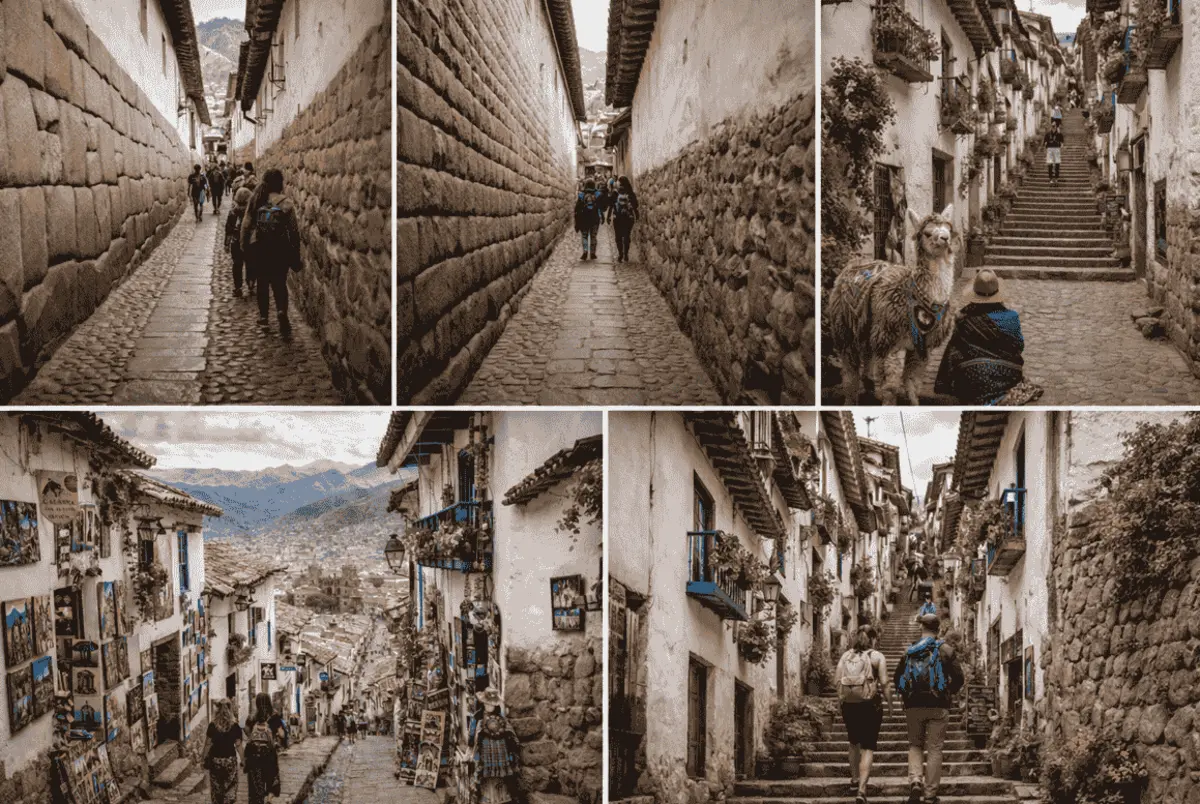
This street was not just any road; it was the outer wall of the palace of Inca Roca, the sixth ruler of Cusco. Unlike other structures, here you can appreciate the “cushioned” or pillowed style of imperial architecture. The stones are not flat; they have an outward protrusion that creates a dynamic effect of light and shadow as the sun crosses the sky. Walking through Hatun Rumiyoc is feeling the weight of power. The walls are high, imposing, and emanate a cold, ancient energy. This street connects the Plaza de Armas with the San Blas neighborhood, serving as a transition between the administrative center and the artisans’ quarter.
The Detail Everyone Looks For
The 12-Angled Stone is the undisputed protagonist. Located halfway down the street, this rock is an enigma of perfect fitting. No mortar or cement was used; it is pure friction and geometry. It is said that if you managed to remove that stone, the entire wall would collapse, demonstrating the structural interdependence of Andean engineering.
Photographic Tip
Most tourists crowd in front of the famous stone. However, the true visual charm of this street lies in the perspective. Step back a few meters and photograph the street lengthwise, capturing how the Inca walls curve gently and how people look tiny next to the megalithic blocks. It is one of the busiest streets of Cusco, so going very early (before 8:00 a.m.) guarantees a clean, mystical shot.
2. Calle Loreto: The Alley of Shadows (Inti K’ijllu)
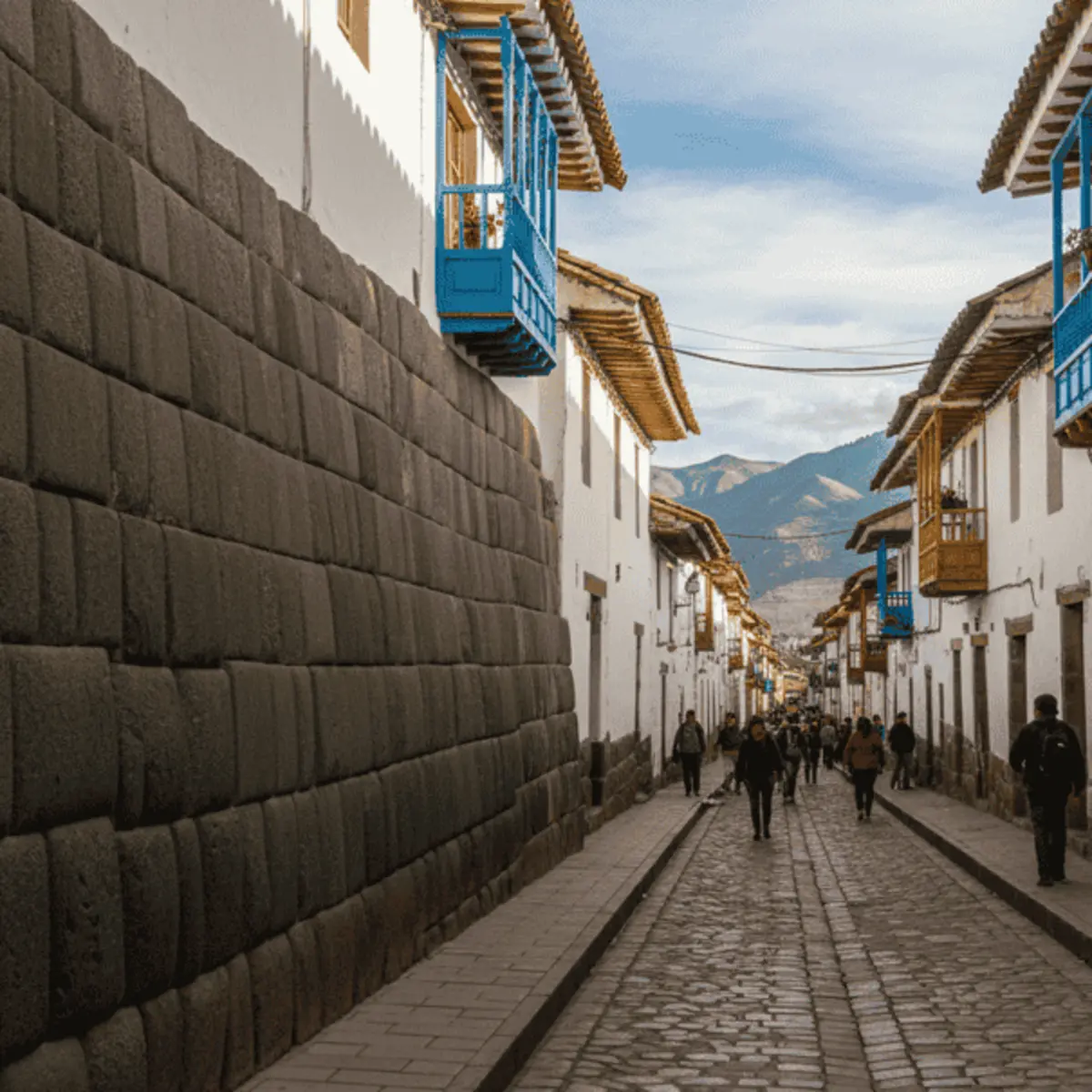
If Hatun Rumiyoc is the street of power, Loreto is the street of mystery and introspection. Known in Inca times as Inti K’ijllu (The Alley of the Sun), it is perhaps the most atmospheric of all the streets of Cusco.
A Hallway Between Two Worlds
Loreto is a long, narrow path flanked by Inca walls of breathtaking height and perfection. The fascination here lies in the contrast.
- On the left (walking down from the Plaza): You see the wall of the Amarucancha, the palace of Huayna Cápac, known as the “Enclosure of the Serpent.” Its masonry is fine, with perfectly aligned rectangular blocks.
- On the right: Stands the wall of the Acllahuasi, the House of the Chosen Women or Virgins of the Sun. This is the oldest and best-preserved wall in the city. Today it is part of the Santa Catalina convent.
Walking through Loreto is a unique sensory experience. The sound of the city is muffled by the height of the walls, creating a tunnel of wind and silence. It is easy to imagine royal processions passing through here five hundred years ago.
Cultural Fusion
At the end of the Inca walls, the street opens up to reveal colonial balconies and tiled roofs. Loreto is the perfect example of how the streets of Cusco narrate the history of the conquest: the solid indigenous base supporting the Spanish religious structure.
The Best Time to Visit
At night. Loreto illuminated by the yellow light of the lanterns is a scene straight out of a period movie. The textures of the stones stand out dramatically, and the elongated shadows give it a phantasmagorical and unforgettable touch.
3. Calle Siete Borreguitos: The Romantic and Viral Jewel
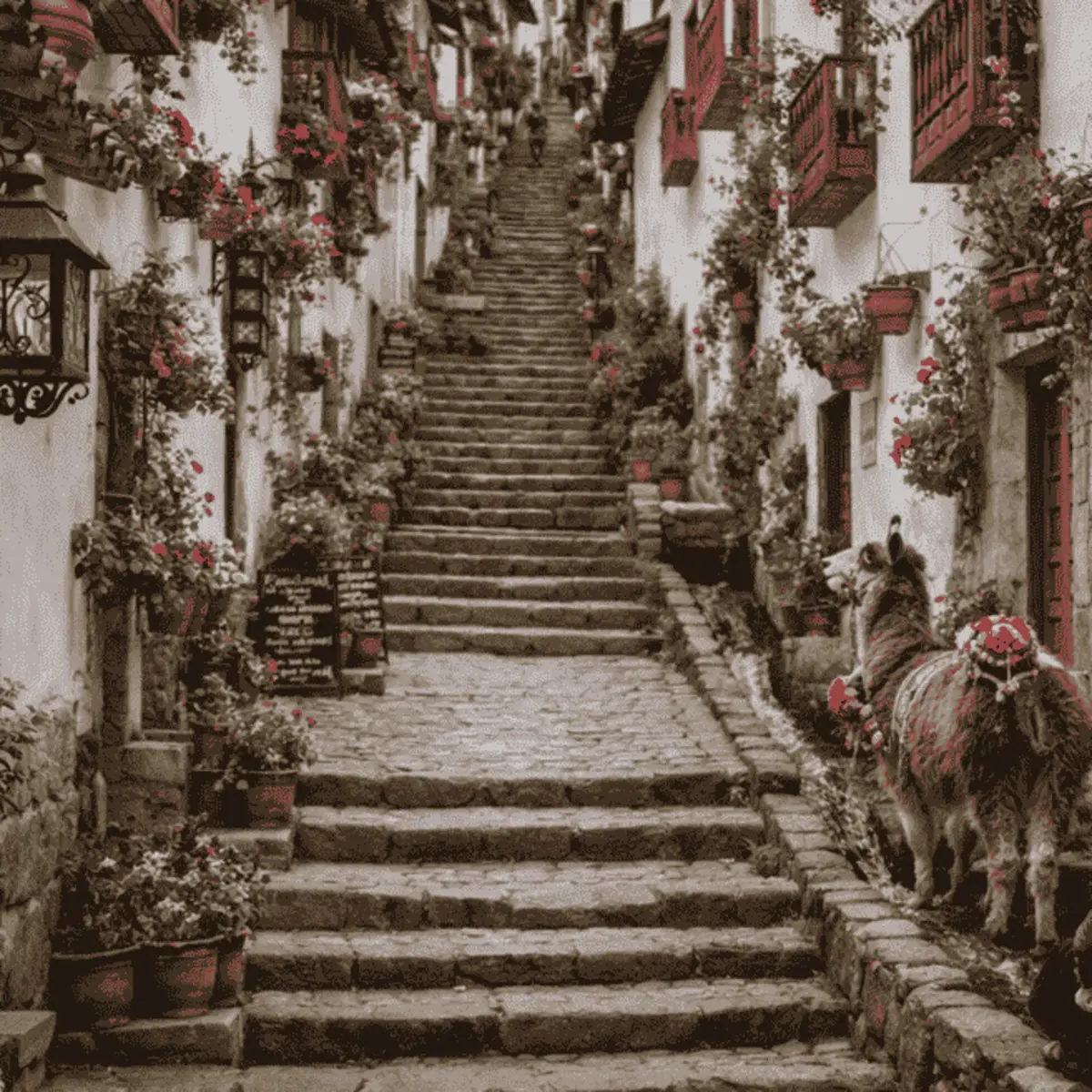
We leave the solemnity of imperial palaces to enter a bucolic and picturesque charm. Among the streets of Cusco that have gained fame in the age of social media, Siete Borreguitos (Seven Little Lambs) takes the prize for the most photogenic and flirtatious.
Why That Name?
Cusco has a fascination with the number seven (Seven Snakes, Seven Masks, Seven Windows, etc.). Siete Borreguitos owes its name to the fact that, in the past, it was the route used by shepherds to bring their herds and pack animals down from the highlands to the city center. Today, you will no longer see livestock, but you will see one of the most carefully curated aesthetics in the city.
Aesthetics and Atmosphere
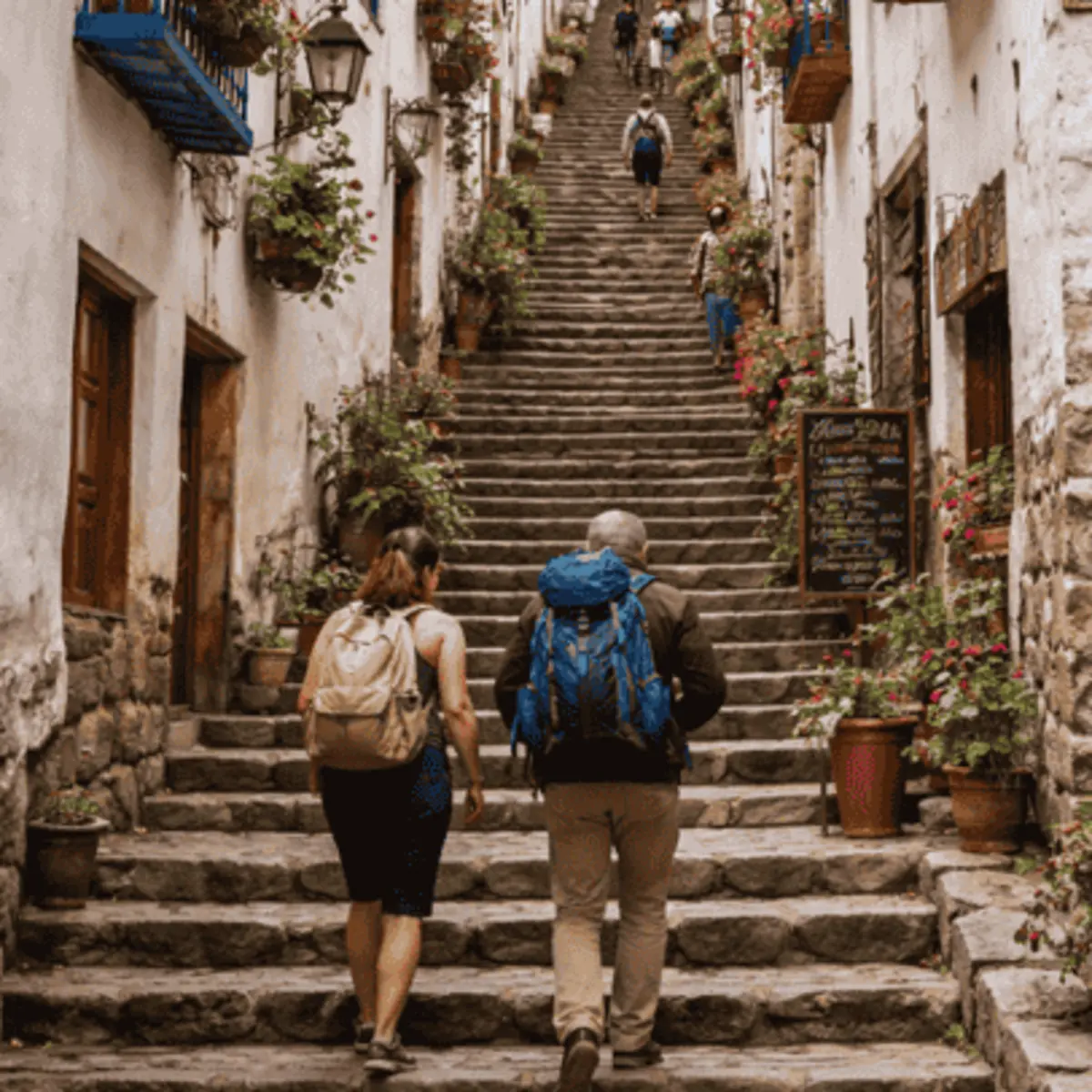
Unlike the gray and massive walls of the center, color explodes here. It is a steep alleyway, with stone steps, whitewashed walls, blue balconies, and dozens of pots with red geraniums hanging from the windows. Located near the colonial aqueduct of Sapantiana (another hidden gem), this street offers the air of an old neighborhood, silent and full of peace. It is the place where couples go to walk hand in hand and where photographers seek to capture the “Romantic Cusco.”
The Perfect Photo
The ideal angle is from the bottom of the stairs, looking up. Try to frame the arches of the aqueduct in the background or simply capture the slope of the street adorned with flowers. It is, without a doubt, one of the streets of Cusco where it is impossible to take a bad photo.
4. Cuesta de San Blas: The Ascent to the Bohemian Heart
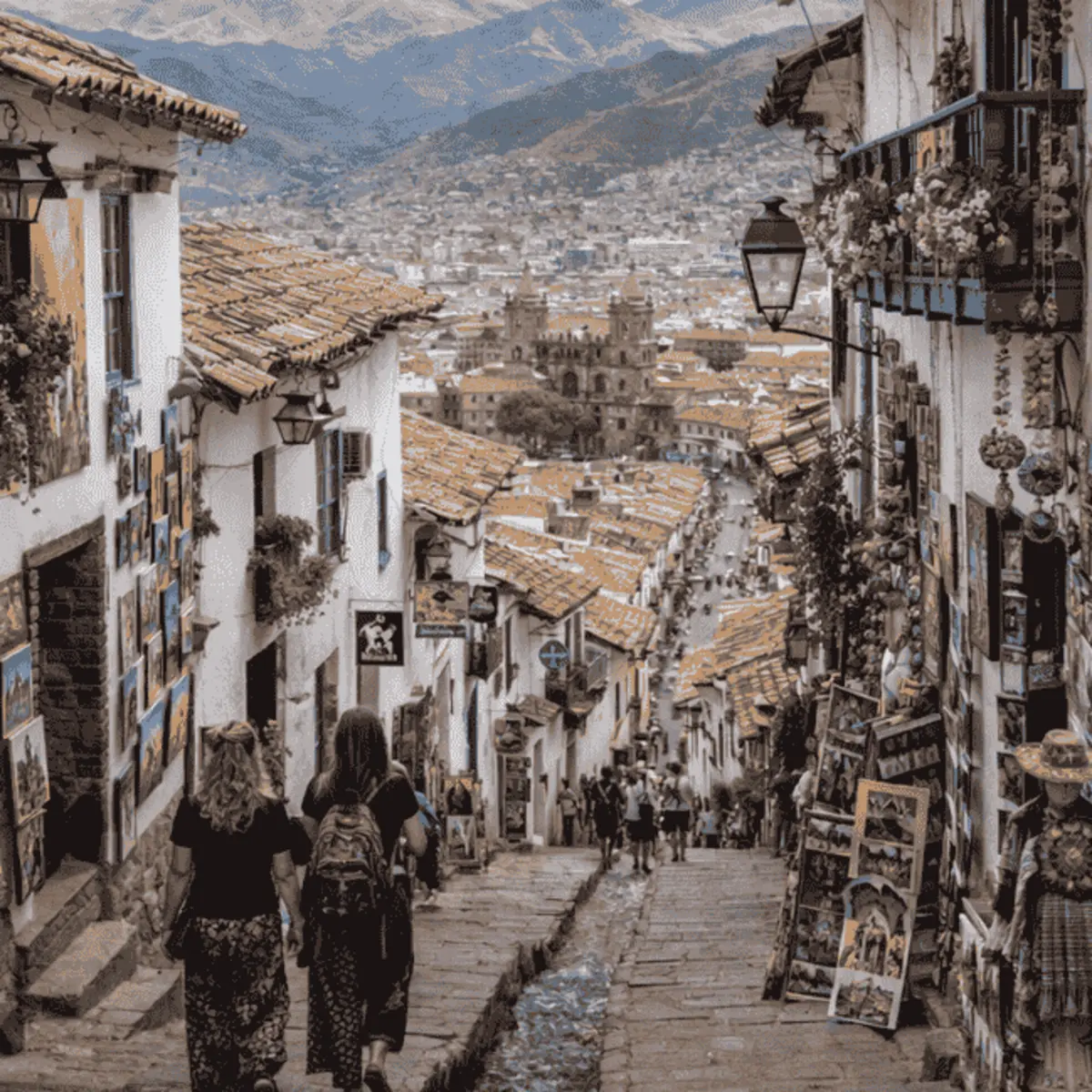
If you want to understand the artistic soul of the city, you have to climb the Cuesta de San Blas. This is one of the most physically demanding streets of Cusco, but every step is rewarded with art, culture, and vitality.
The Path of the Artisans
San Blas has been known as the artisans’ neighborhood since Inca times (the Toco Cachi district). The street that bears its name is the backbone of this area. As you climb, you will notice that the houses change: the doors become smaller and more colorful (the famous blue doors), and the shop windows display everything from silver jewelry to grotesque-style ceramics and paintings from the Cusco School.
A Feast for the Senses
Climbing up here is exhausting due to the incline, but it is delightful. The aroma of freshly roasted coffee wafts from bohemian cafes, Andean music fused with jazz is heard in small bars, and artists can be seen painting live inside their galleries. This street connects the Plaza de Armas with the Plazoleta de San Blas, where the colonial temple with its famous intricately carved wooden pulpit awaits you. It is one of the streets of Cusco that has the most life of its own; there is always movement, travelers from all over the world, and locals offering their art.
Detail to Observe
Look at the baseboards of the walls and the cobblestone floor. It is a pavement that has been polished by millions of footsteps. Also, don’t forget to look back while you climb: the view of the city and the Cathedral appearing between the rooftops is spectacular.
5. Calle Resbalosa: The Challenge with the Best Reward
Its name is not a metaphor. Calle Resbalosa (“Slippery Street”) is one of the steepest climbs and, indeed, its cobblestones can be slippery, especially in the rainy season. However, it appears on this list because it represents urban adventure and offers the best panoramic view among all the streets of Cusco.
Origin and Legend
Located in the old neighborhood of San Cristóbal (Qolqampata), this street was part of the access to the granaries and storehouses of the empire. Its incline is such that it forces the walker to go slowly, almost in a forced reverence toward the mountain.
The Natural Viewpoint
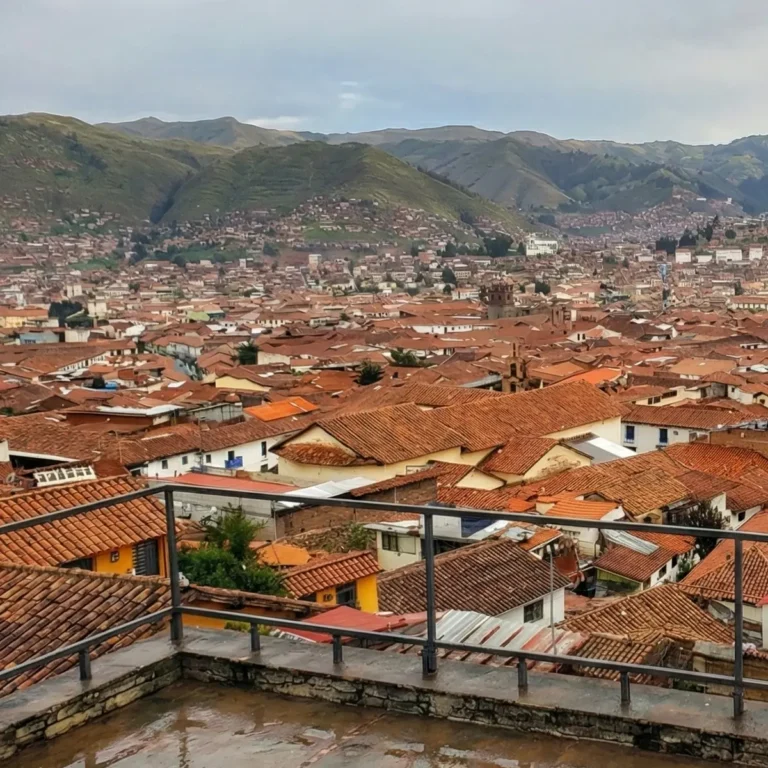
The goal of climbing Resbalosa is to reach the San Cristóbal Plaza. Upon crowning the climb, you will turn around and have Cusco at your feet. From there you can see the Plaza de Armas, the red tile roofs extending like an infinite mantle, and the snowy Ausangate in the distance if the day is clear. It is one of the streets of Cusco least traveled by mass tourism, which gives it an air of authenticity. Here you will see the local “mamachas” coming down with their bundles and children playing on the slopes, a scene of daily life that is often lost in the tourist center.
Route Recommendation
Do not climb it if you have just arrived and feel unwell due to the altitude. It is better to do it downhill from San Cristóbal towards the center, or climb it very calmly, stopping to breathe and admire how the perspective of the city changes with every meter gained.
Practical Guide for a Photographic Route through the Streets of Cusco
To make your experience touring these streets of Cusco memorable and safe, we have designed a logical itinerary that maximizes your time and minimizes unnecessary fatigue.
Half-Day Itinerary: “Stone, Art, and Altitude”
- Start (08:30 AM): Begin at the Plaza de Armas. Head towards Calle Loreto. The morning light enters softly, ideal for appreciating textures without harsh shadows. Walk in silence and feel the history.
- Imperial Connection (09:15 AM): Upon leaving Loreto, cross towards Calle Triunfo and connect with Hatun Rumiyoc. Take your time at the 12-Angled Stone, but continue to the end of the street to see the slope that leads to San Blas.
- The Bohemian Ascent (10:00 AM): Climb the Cuesta de San Blas. Enter one or two art galleries. Have a coffee halfway up to rest your legs.
- The Picturesque Detour (11:30 AM): From the upper part of San Blas, look for the route to Calle Siete Borreguitos. It is the perfect time for “lifestyle” and portrait photos. The midday light will illuminate the flowers and white walls.
- The Grand Finale (12:30 PM): Head towards the San Cristóbal neighborhood (you can take a short taxi or walk along the upper part) and descend via Calle Resbalosa. Seeing the city open up before you as you descend is a powerful visual experience. Finish by having lunch near the Plaza de Armas.
Expert Tips for Walkers at Altitude
Touring the streets of Cusco is a pleasure, but we are at 3,400 meters (11,150 feet) above sea level. Here are vital tips:
- Footwear is Key: Forget heels or smooth-soled shoes. The streets of Cusco are made of irregular cobblestones, polished by centuries of use. You need sneakers with good grip or light trekking boots to avoid slipping, especially on streets like Resbalosa or San Blas.
- Hydration and Rhythm: At altitude, the heart works faster. Do not try to walk at the pace you would in New York or London. Adopt the “Cusco pace”: slow, steady, and rhythmic. Always carry water and perhaps some coca candies.
- Safety: Although Cusco is very safe, narrow and crowded streets like Hatun Rumiyoc are places where pickpockets sometimes operate. Carry your backpack on your front in crowded areas and keep your camera secured to your body with a strap.
- Respect for Heritage: It is strictly forbidden to paint, scratch, or even lean with excessive force on Inca walls. They are World Heritage sites. Help preserve the streets of Cusco for future generations by being a responsible tourist.
Beyond the Map: The Secret of Getting Lost
While we have listed the top five, the magic of Cusco lies in the fact that any alleyway can hide a treasure. Streets like Pumacurco, Choquechaca, or Siete Culebras also deserve an honorable mention. The important thing is to understand that the streets of Cusco have personality. Some are severe and military (those of pure Inca origin), others are joyful and religious (the colonial ones), and others are hybrid and chaotic. As you walk, pay attention to the door lintels: you will see Spanish noble coats of arms carved in stone, dates from the 17th and 18th centuries, and bronze knockers shaped like hands or lions.
Night Lighting
A final tip: don’t limit yourself to the day. The municipality of Cusco has done a great job with the lighting of the historic center. The warm light that bathes the stones at night completely transforms the atmosphere. The streets of Cusco that are bustling by day become mystical and silent by night, perfect for reflection.
Conclusion: Your Footprint in History
Traveling to Cusco and not dedicating at least one full day to exploring its urban arteries is a mistake. Machu Picchu is the jewel in the crown, yes, but the city of Cusco is the heart that pumps the blood of Andean culture. The streets of Cusco will teach you about resistance, beauty, and the human capacity to create eternal works. Whether you are looking for the perfect photo for your social media on Siete Borreguitos, the historical connection in Loreto, or the physical challenge on Resbalosa, the city has a path waiting for you.
Every cobblestone you step on has witnessed empires rise and fall, revolutions, and millions of travelers who, like you, arrived looking for something more than a tourist destination: they were looking for a connection. So, tie your shoes well, charge your camera, and go out to conquer the streets of Cusco. History is not just read; it is walked.
Are you ready to experience the magic of the Andes firsthand? Peru is a country of infinite stories, and Cusco is its best storyteller. Contact us to design a custom itinerary that includes not only the classic visits but these walking tours that transform a simple trip into an unforgettable life experience. Your adventure begins at the next corner.
OUR TIKTOK ACCOUNT
BLOG HOME:
https://bestmachupicchutours.com/blog
VISIT OUR SOCIAL MEDIA:
https://www.facebook.com/infocusco