Museums in Cusco: The Untold Side of Imperial History That Most Travelers Ignore & 5 Essential Museums You Cannot Miss
When the traveler dreams of the ancient capital of the Tahuantinsuyo, their mind usually projects immediate images of stone citadels amidst the mist, trains winding toward the high jungle, and the majesty of Machu Picchu. However, reducing the experience of this millennial city only to its archaeological ruins is to leave out a fundamental piece of the historical puzzle. To truly understand the soul of the Andes, it is essential to immerse yourself in the vast array of museums in Cusco.
These venues are not simple exhibition halls; they are time capsules that safeguard the legacy of pre-Inca civilizations, the splendor of the Incanato, the cultural clash of the conquest, and vibrant contemporary artistic expression. Often ignored by hurried itineraries, the museums in Cusco offer the deep narrative that every visitor needs to contextualize what they see on the streets.
In this extensive and detailed article, we will explore why these cultural spaces are the perfect complement to your trip, we will thoroughly analyze the five most important ones, and we will give you practical tips to make the most of your visit. Get ready to discover the most intellectual, artistic, and fascinating side of the Imperial City.
Why are museums in Cusco essential for your trip?
Many tourists make the mistake of viewing museums as a secondary or “filler” activity. However, integrating a route of museums in Cusco into your planning has strategic, educational, and logistical benefits that can completely transform the quality of your experience in Peru.
1. The perfect acclimatization strategy
Cusco is located at 3,399 meters (11,152 feet) above sea level. “Soroche,” or altitude sickness, is a reality that affects many travelers during the first 24 to 48 hours. Doctors and expert guides recommend avoiding intense physical effort as soon as you land. This is where museums in Cusco become your best allies. Touring these spaces does not require strenuous walks or climbing steep stairs as archaeological sites do. It is a slow, reflective, and quiet activity that allows your body to oxygenate properly while your mind nourishes itself with history.
2. Historical context to understand the stones
What is the use of looking at a perfectly fitted stone wall if you do not understand the engineering, the worldview, and the social organization that made it possible? The museums in Cusco function as the prologue to a great book. By visiting places like the Inca Museum or the Qoricancha Site Museum before going to Machu Picchu or Sacsayhuamán, you obtain the intellectual tools to decipher Andean symbology. You will understand why gold was the “sweat of the sun,” how cranial trepanation worked, or what the geometric designs on textiles represented.
3. Accessibility and economy
Unlike other great tourist capitals of the world where culture can be expensive, the majority of museums in Cusco are surprisingly accessible. Several of the most important ones are included in the Cusco Tourist Ticket (BTC), an integral pass that you will likely buy to visit the ruins anyway. Furthermore, their central location allows you to walk from one to another, turning the historic center into a great open-air museum.
The Unmissable Circuit: The 5 Museums You Must Know
Below, we break down the five most outstanding venues. We have selected these places not only for the quality of their pieces but for how each one tells a different chapter of Cusqueñan history. By visiting these museums in Cusco, you will obtain a 360-degree vision of the region.
1. Inca Museum: The Guardian of Andean Identity
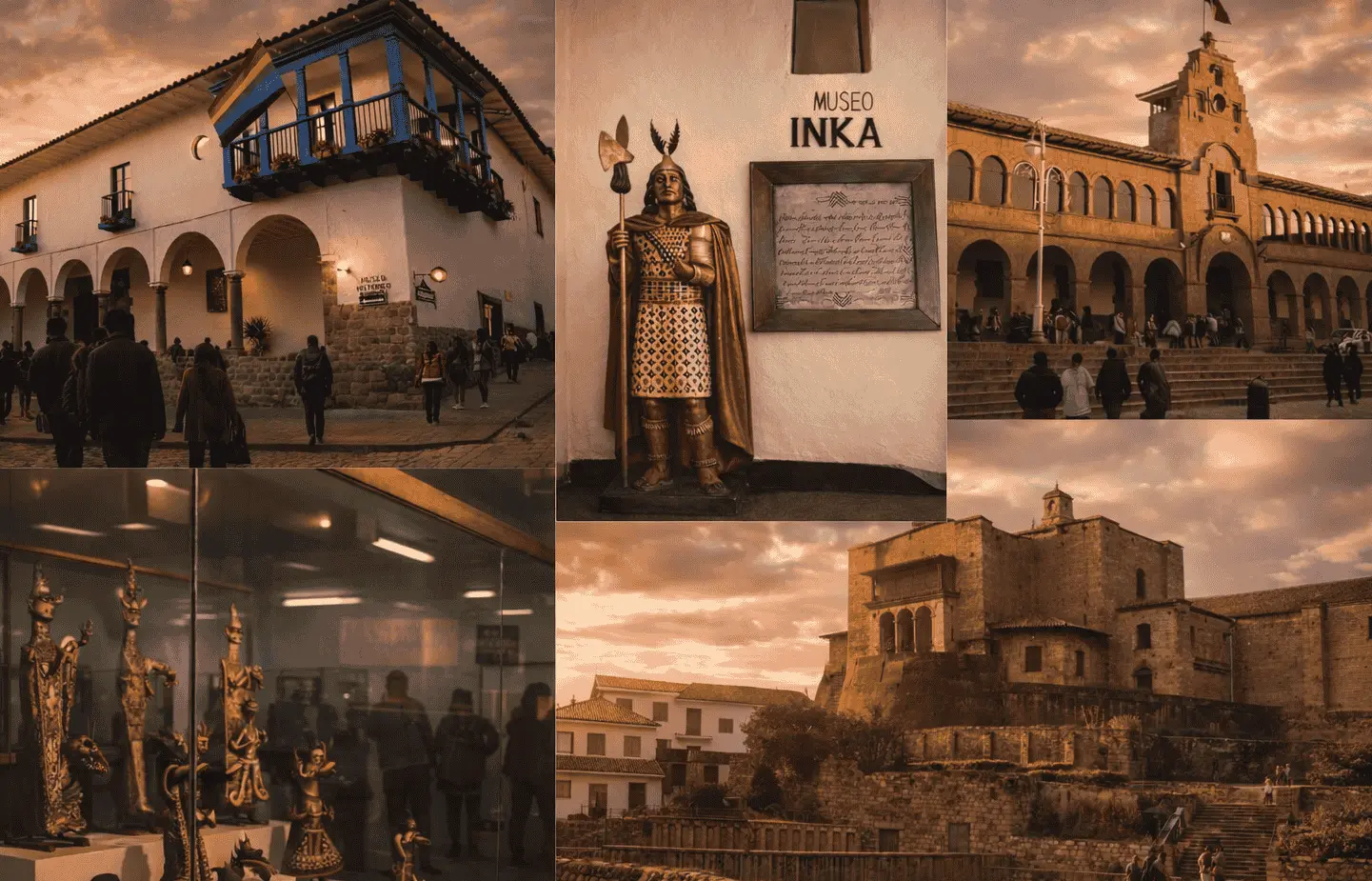
If you only had time to visit one of the museums in Cusco, this should be your priority choice. Administered by the National University of San Antonio Abad of Cusco, the Inca Museum is, without a doubt, the most complete archive on the civilization that ruled a large part of South America.
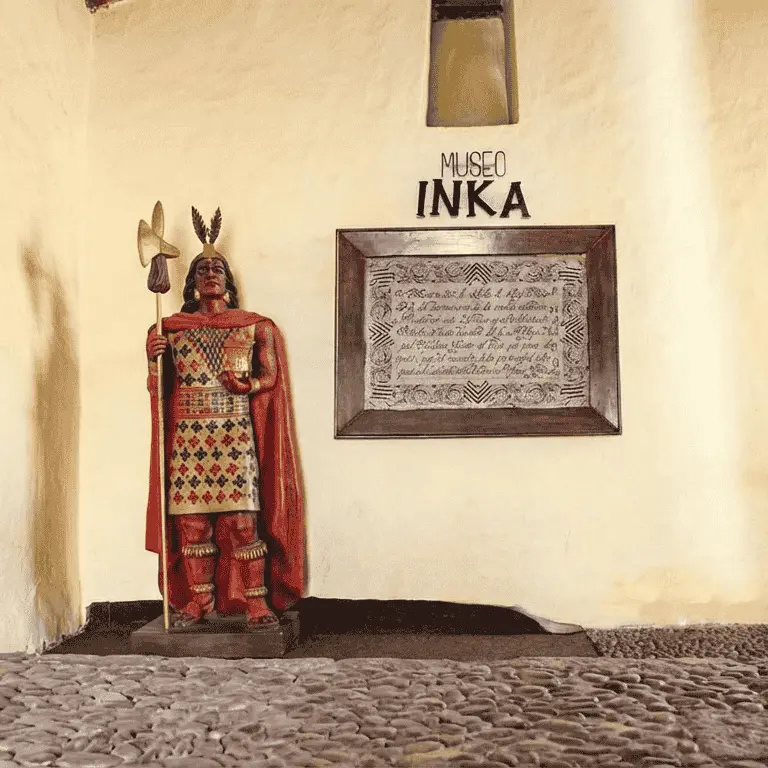
The Building: A Jewel in Itself The museum is housed in the “Casa del Almirante” (Admiral’s House), a 17th-century colonial mansion that belonged to Admiral Francisco Aldrete y Maldonado. The architecture of the building is a testimony to miscegenation: a Renaissance portal, colonial courtyards with stone arches, and, in its foundations, original Inca walls. Just entering the building justifies the visit.
The Collection: A Chronological Journey What makes this place stand out among other museums in Cusco is its chronological narrative.
- Pre-Inca Cultures: History did not begin with the Incas. Here you will see ceramics and tools from the Marcavalle and Chanapata cultures, the first inhabitants of the valley.
- The Empire: Rooms dedicated to metallurgy, agriculture (with models of the terraces and hydraulic systems), and war.
- Textiles and Keros: It possesses one of the most impressive collections of “Keros” (ceremonial wooden vessels) and textiles that have survived centuries thanks to the dry climate of the Andes.
- The Hall of Mummies: Perhaps the most shocking part that differentiates the Inca Museum from other museums in Cusco. Here, real mummies are exhibited in the fetal position, skulls with intentional deformations (a sign of status), and evidence of successful cranial trepanations, demonstrating the advancement of Inca medicine.
Practical Data:
- Location: Cuesta del Almirante 103 (Half a block from the Plaza de Armas).
- Cost: 10 soles for foreigners, 5 soles for Peruvians.
- Tip: Do not miss the weavers in the central courtyard, who show ancestral techniques live.
2. Regional Historical Museum of Cusco (Casa Garcilaso)
To understand the trauma and fusion that the Spanish conquest signified, it is necessary to visit the Regional Historical Museum. Among the museums in Cusco, this one stands out for being the childhood home of one of the most illustrious figures in literature and universal history: the Inca Garcilaso de la Vega.
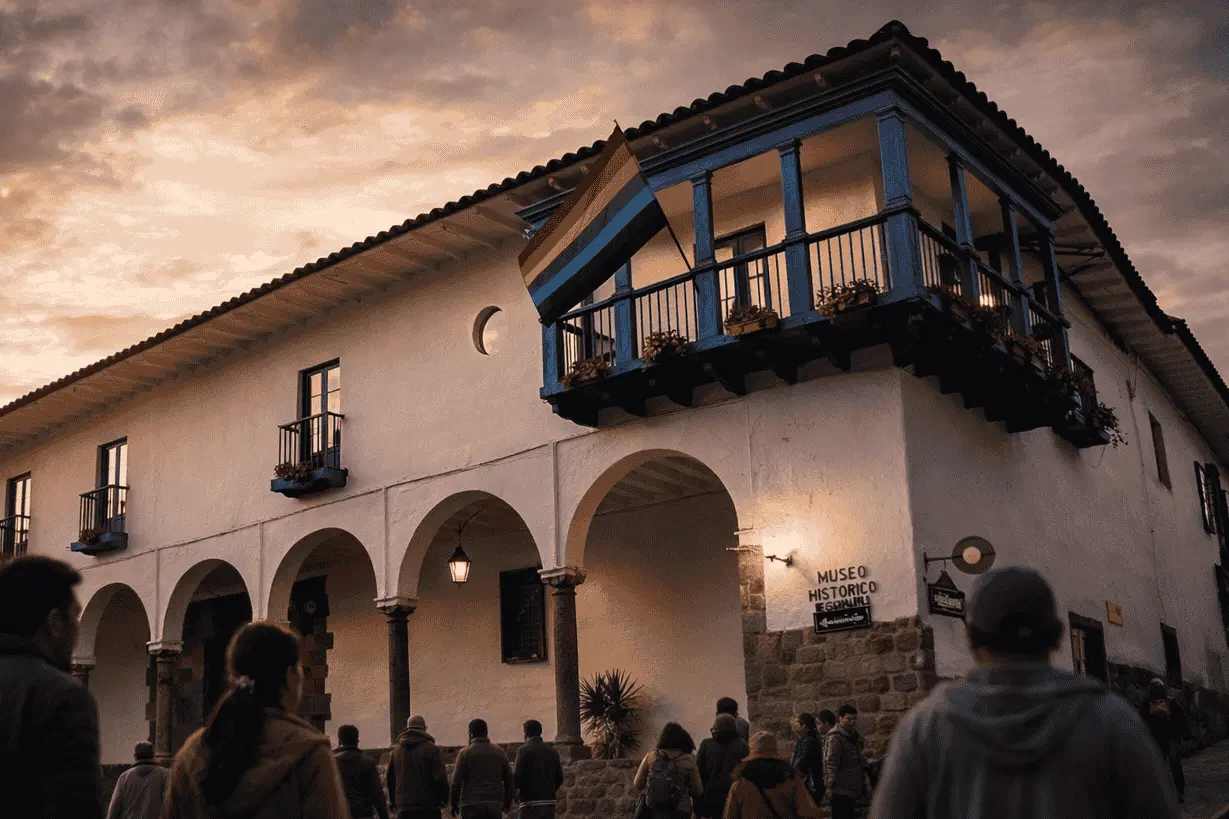
The Home of the First Mestizo Garcilaso was the son of a Spanish captain and an Inca princess. His house, today converted into a museum, symbolizes that union. He was the author of the “Royal Commentaries of the Incas,” a fundamental text for understanding the empire. Walking through its corridors is walking through the childhood of the man who tried to reconcile two worlds in conflict.
Treasures of the Collection This venue offers a variety that few museums in Cusco can match:
- Paleontology: Fossils of glyptodonts and megatheriums found in the area, reminding us that this valley was inhabited by megafauna thousands of years ago.
- Viceregal Period: Paintings from the famous Cusco School. Here you will observe how indigenous artists reinterpreted Catholic icons, adding Andean elements such as the cuy (guinea pig) in the Last Supper or virgins shaped like a mountain (Pachamama).
- The Tupac Amaru II Room: A space dedicated to the rebellion of José Gabriel Condorcanqui. It is moving to see the documents and representations of the struggle for independence, a crucial topic that other museums in Cusco touch upon more superficially.
Practical Data:
- Location: Calle Heladeros s/n (Corner with Plaza Regocijo).
- Cost: Included in the Tourist Ticket (Circuit II).
- Hours: From 8:00 a.m. to 5:00 p.m.
3. Qoricancha Site Museum: Beneath the Garden of Gold
The Qoricancha (Golden Enclosure) was the most important temple of the Inca Empire, the religious center where all roads (Ceques) converged. Although the temple itself is a must-see, the underground site museum is a hidden gem that complements the experience and positions itself as one of the most didactic museums in Cusco.
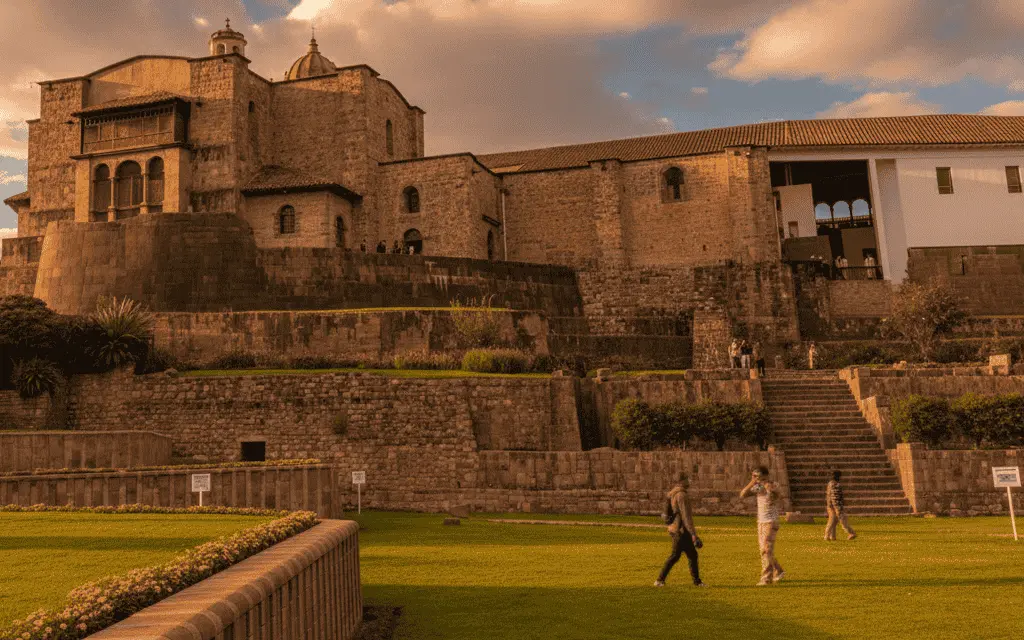
A Look Underground Located under the green esplanade in front of the Santo Domingo temple, this museum is small but dense with information. Its main value lies in showing what has been found in situ. While other museums collect pieces from various regions, this one focuses on the specific sacredness of that place.
What will you find here?
- Samples of Masonry: Detailed explanations of how the Incas achieved the perfect polishing of stones, using hematite and meteorite tools.
- Offerings: Votive objects, small gold and silver figures (replicas and rescued originals), and Spondylus shells brought from Ecuador, demonstrating the empire’s trade network.
- Mummies and Bundles: Exhibition of burials found in the sacred zone.
- Interpretive Panels: Unlike other museums in Cusco that sometimes lack good signage, this museum does an excellent job explaining the Andean worldview and the astronomical distribution of the temple.
Practical Data:
- Location: Avenida El Sol (Opposite the Palacio del Inka hotel).
- Cost: Included in the Tourist Ticket.
- Note: It is independent of the entrance to the Temple of Santo Domingo/Qoricancha (which is paid separately), which sometimes confuses tourists.
4. Museum of Popular Art: The Soul of the People
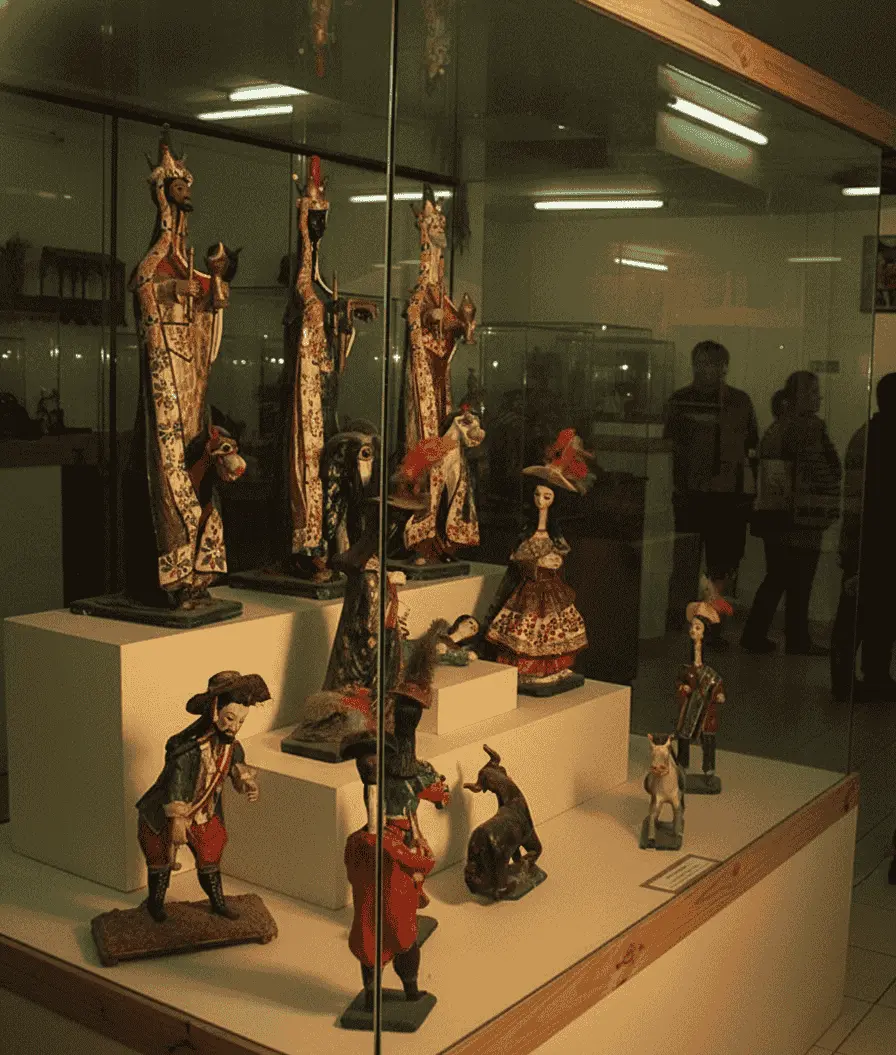
Cusco does not live only on its glorious past; it is a city of living traditions. The Museum of Popular Art, administered by the American Institute of Art, is the most colorful and joyful space of all the museums in Cusco. Here the protagonist is not the Inca or the Conquistador, but the artisan of the people.
The Mastery of Manual Art This museum celebrates the creativity of the peasant and the mestizo. It is a tribute to the hands that mold clay, carve wood, and weave wool.
- Cusco Imagery: You can admire the famous long-necked virgins and saints, a style popularized by master Hilario Mendívil from the San Blas neighborhood. These pieces are icons of popular religious art and differentiate this collection from that of other museums in Cusco.
- Dance Masks: Cusco is a land of patron saint festivals. The museum exhibits a vast collection of masks used in dances such as the Saqra, the Diablada, or the Qhapaq Qolla. Seeing them up close allows you to appreciate the irony, fear, and devotion they represent.
- Models and Miniatures: Representations of daily life, Andean nativities, and costumbrist scenes full of humor and detail.
Practical Data:
- Location: Avenida El Sol 103 (In the basements of the tourist galleries).
- Cost: Included in the Tourist Ticket.
- Why go: It is a quick visit (30-40 minutes) that will fill you with inspiration, especially if you plan to buy handicrafts later.
5. Museum of Contemporary Art: The Current Gaze
To close the historical circle, it is necessary to see what artists are creating today. The Museum of Contemporary Art is a necessary rarity. While most tourists look for the ancient, this is one of the few museums in Cusco dedicated to modernity.
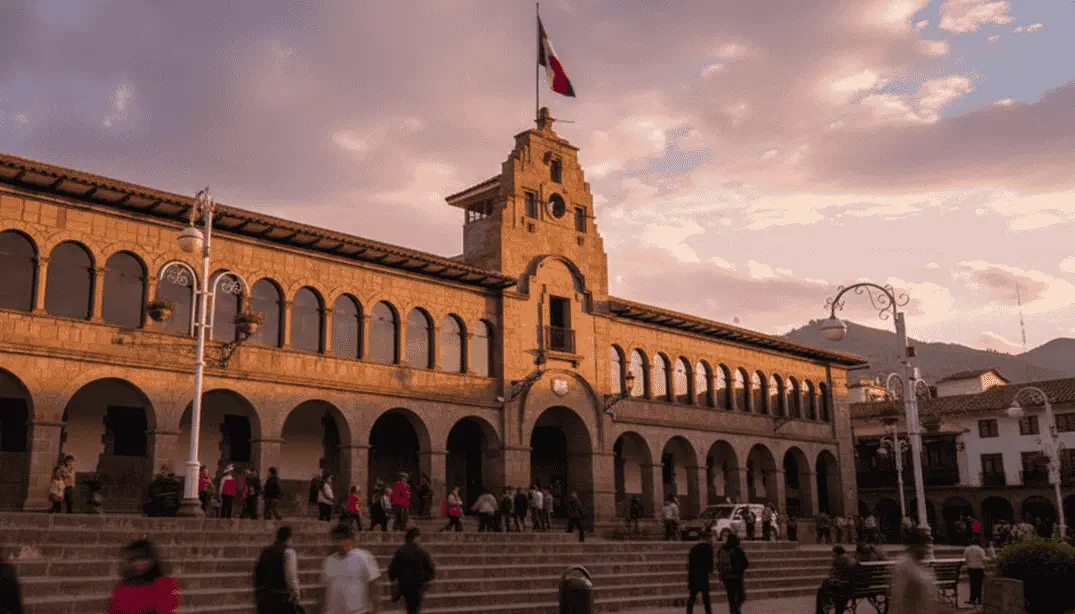
Art in the Municipal Palace Located in the Municipal Palace in Plaza Regocijo, this museum breaks with the archaeological aesthetic. Here, more than 280 works by local, national, and international artists are exhibited.
Dialogue between Past and Present The fascinating thing about this space is seeing how contemporary artists reinterpret their heritage. It is not abstract art disconnected from reality; it is art that questions, celebrates, and transforms Andean identity.
- Painting and Sculpture: Works that use modern techniques but Andean themes.
- Temporary Exhibitions: They frequently rotate their rooms to make space for new Cusqueñan talents, which means there is always something new to see, unlike the static collections of other museums in Cusco.
Practical Data:
- Location: Plaza Regocijo (Cusipata), inside the Municipal Palace.
- Cost: Included in the Tourist Ticket.
- Atmosphere: It is a very quiet place, ideal for escaping the bustle of the street and enjoying the silence and visual aesthetics.
Expert Tips for Your Museum Route
Visiting the museums in Cusco is simple, but some local tips can substantially improve your experience and save you time and money.
The power of the Tourist Ticket (BTC)
We mentioned the Tourist Ticket earlier, but it is vital to emphasize its importance. This ticket is the master key to the city. If you plan to visit the Regional Historical Museum, the Popular Art Museum, the Contemporary Art Museum, and the Qoricancha Site Museum, they are already included. Buying tickets separately for other sites would be much more expensive. The BTC validates your entry to the most important network of museums in Cusco and archaeological sites.
Strategic Schedules
Most museums open between 8:00 a.m. and 9:00 a.m. and close around 6:00 p.m.
- Lunch hour (1:00 p.m. – 2:00 p.m.): This is the best time to visit the most popular museums like the Inca or Casa Garcilaso. While most tourists are in restaurants, you can have the rooms almost to yourself.
- Sundays: Be careful with Sundays, as some museums reduce their hours or close. Always check before you go.
Photography and Respect Rules
In almost all museums in Cusco, the use of flash is prohibited. Intense light damages the ancient pigments of textiles and colonial paintings. In some specific cases (such as certain rooms of the Inca Museum), photography and video may be totally prohibited out of respect for human remains (mummies). Always be respectful of the rules; we are dealing with world heritage.
Guides: Hire or go solo?
Although the pieces usually have descriptions (sometimes in Spanish and English), the wealth of information possessed by a local guide is incomparable. If you are a history buff, hiring a private guide for a half-day tour of two or three museums in Cusco can be an investment that multiplies the value of your visit. They will tell you the legends and “historical gossip” that are not written on the information plaques.
Suggested Itinerary: “Cultural Cusco in One Day”
If you wish to dedicate a day exclusively to culture, here we propose a logical route that minimizes walking and maximizes learning through the museums in Cusco.
Morning: Deep Roots
- 09:00 a.m.: Start at the Inca Museum. Being fresh in the morning, you will have a clear mind to absorb the complex history of the Tahuantinsuyo. Dedicate at least an hour and a half to it.
- 11:00 a.m.: Walk towards Plaza Regocijo and enter the Regional Historical Museum (Casa Garcilaso). Here you will connect the Inca history you just saw with the arrival of the Spanish and the colonial era.
Midday: Art and Lunch
- 12:30 p.m.: Cross the square towards the Museum of Contemporary Art. It is a light 30-minute visit to refresh your eyes with modern art before lunch at one of the downtown restaurants.
Afternoon: Tradition and Mysticism
- 03:00 p.m.: Walk down Avenida El Sol towards the Museum of Popular Art. Enjoy the creativity of the artisans and perhaps get inspired to buy a souvenir.
- 04:00 p.m.: Finish your tour at the Qoricancha Site Museum. Upon leaving, you can visit the main temple and watch the sunset over the sacred gardens, closing your tour of museums in Cusco with a flourish.
Beyond the Display Cases: Architecture as a Museum
An aspect often overlooked when talking about museums in Cusco is that the containers are as valuable as the content. Cusco is one of the few cities in the world where architectural syncretism can be seen in such a brutal and beautiful way.
When visiting Casa Garcilaso or the Admiral’s Palace (Inca Museum), look at the lintels of the doors, the noble coats of arms carved in stone, and the immense Inca walls that serve as a base. You are entering buildings that have withstood earthquakes, revolutions, and the passage of half a millennium. The walls of the museums in Cusco speak as much as the pieces they exhibit. Observe the coffered ceilings, the carved wooden balconies, and the courtyards paved with river stones. That atmosphere is what transports you to the past.
Religious Art: An Honorable Mention
Although this guide focuses on the five main museums mentioned, we cannot fail to note that the churches of Cusco function as living museums. The Cathedral and the Archbishop’s Palace Museum (famous for the 12-angled stone in its exterior wall) house collections of religious art that rival the best museums in Europe. If your thirst for culture is not quenched by the main list of museums in Cusco, these sacred venues are the natural extension of your tour, offering a deep look at the faith and art of the viceroyalty.
Conclusion: A Transformative Experience
Cusco is a city that seduces the senses. The food, the landscapes, and the energy of the people are unmatched. But it is in its museums where its memory resides. Without memory, a trip is just a succession of pretty photos.
Touring the museums in Cusco allows you to assemble the puzzle of one of the most enigmatic civilizations in human history. It allows you to look into the eyes (metaphorically, and literally in the case of the mummies) of the ancient inhabitants of the Andes. It allows you to understand the resistance, adaptation, and beauty of their culture.
Do not view rainy days or moments of rest as lost time. They are the perfect opportunity to enter these sanctuaries of knowledge. At the end of your trip, when you remember Cusco, you will not only remember the grandeur of its mountains but also the richness of its stories, those you discovered walking slowly through the halls of the museums in Cusco.
Make your trip something more than tourism; make it an exploration. History is waiting for you with open doors. Are you ready to cross the threshold and discover the secrets held by the Archaeological Capital of the Americas?
OUR TIKTOK ACCOUNT
BLOG HOME:
https://bestmachupicchutours.com/blog
VISIT OUR SOCIAL MEDIA:
https://www.facebook.com/infocusco