Cusco Viewpoints: The Ultimate Guide to Touching the Sky in the Inca Capital
Cusco is a city that resists being understood with a single glance from ground level. Its geography—an inter-Andean valley flanked by hills that breathe history—demands that the traveler raise their eyes and, above all, elevate their spirit. While walking through its stone streets is an intimate dialogue with the past, ascending to the Cusco viewpoints (miradores) is to witness the complete symphony of the Imperial City.
From the heights, the ancient capital of the Tahuantinsuyo reveals its true form. It is said that the original layout of the city was shaped like a puma, and it is only from these elevated points that one can attempt to decipher that sacred silhouette amidst the red clay roofs and colonial domes. Visiting the Cusco viewpoints is not simply just another tourist activity; it is a necessity to understand the scale, complexity, and dramatic beauty of one of the world’s most fascinating cities.
In this extensive article, we won’t just list the locations; we will take you by the hand through a visual, historical, and sensory route across the 5 Cusco viewpoints that will define your travel experience. Get ready to discover where the earth meets the Andean sky.
The Philosophy of Height: Why Climb?
Before lacing up our shoes and beginning the ascent, it is worth asking: What is so special about the Cusco viewpoints? In Andean worldview (cosmovision), the world is divided into three planes: the Uku Pacha (world below), the Kay Pacha (this world), and the Hanan Pacha (world above). Climbing the hills that surround the city is to physically approach the Hanan Pacha, the domain of the stars and celestial deities.
When you include a visit to the Cusco viewpoints in your itinerary, you are participating in a millennia-old tradition of observation. The ancient Incas used these elevations not only as strategic lookout points but as ceremonial and astronomical centers. Today, for the modern traveler, these spaces offer:
- Geographic Context: You will understand how the city expands like an urban stain that respects (and sometimes defies) the topography of the Andes.
- The Golden Hour: Photographers know that the light in the Peruvian highlands is unique. The Cusco viewpoints are the perfect settings to capture that magical moment of sunset.
- Peace in the Chaos: The historic center can be bustling. The heights offer silence, fresh wind, and perspective.
Below, we exhaustively break down the five jewels you cannot miss.
1. Cristo Blanco: The Guardian with Open Arms
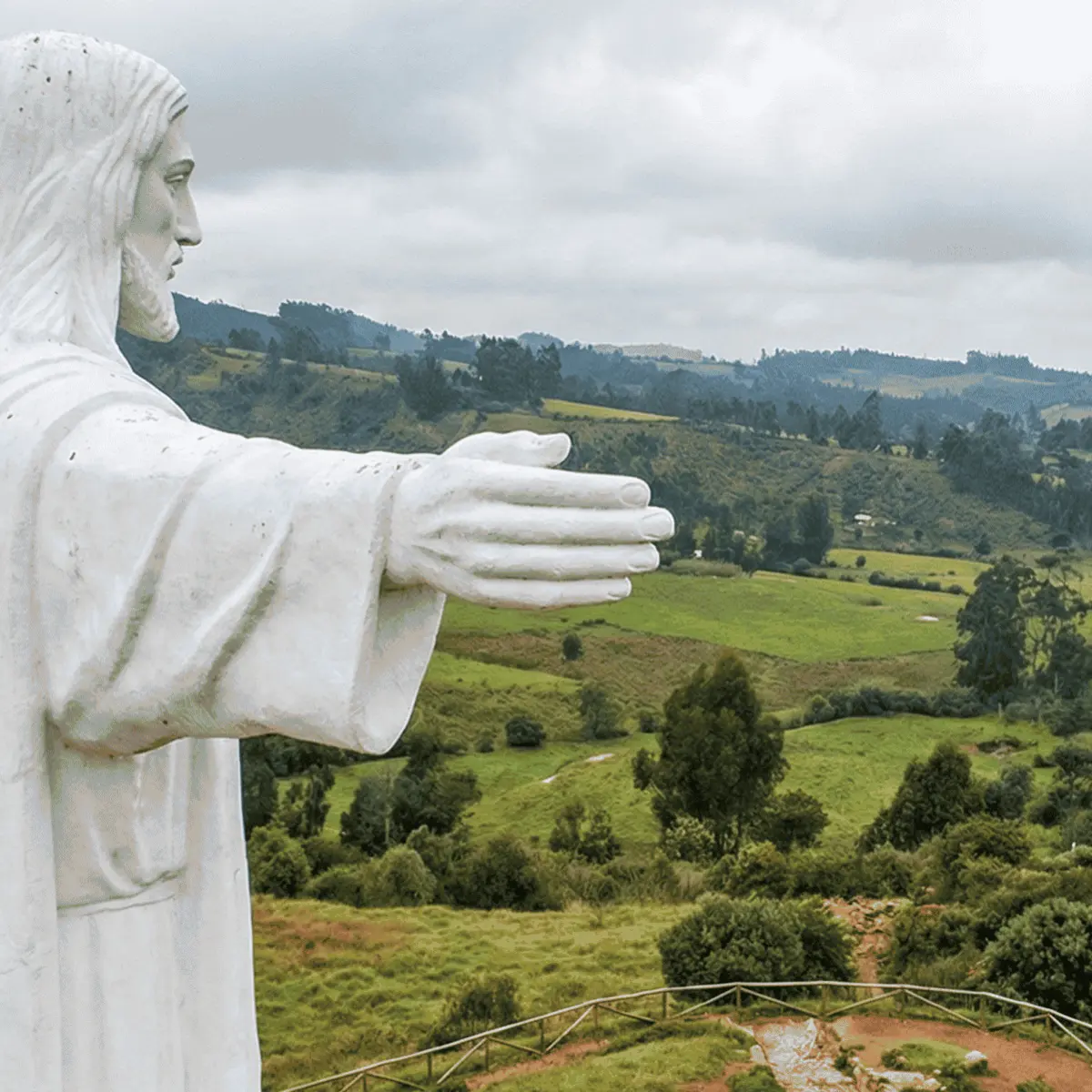
If there is an image that competes in majesty with Inca architecture, it is the panoramic view from Cristo Blanco. Of all the Cusco viewpoints, this is perhaps the one that offers the most complete and democratic vision of the city: from here, you see everything, without filters or obstructions.
History and Meaning
The statue, which stands imposing at 8 meters tall, is not a colonial remnant, but a gift from the Palestinian refugee community in Cusco in 1945. It is a symbol of gratitude and welcome. Located on Pukamoqo Hill (Red Hill), this place carries a mythical charge: according to Inca legends, this soil contained earth brought from all the nations conquered by the Empire (the Tahuantinsuyo), turning it into a sacred microcosm. Therefore, Cristo Blanco is not only one of the highest Cusco viewpoints, but a point of energetic convergence.
The Visual Experience
Upon arriving at the esplanade, the city unfolds like a living map. You will be able to identify the Plaza de Armas as the beating heart, Avenida El Sol cutting through the urban grid, and in the distance, the airport and modern expansion. It is one of the Cusco viewpoints where the contrast between the uniform colonial roofs and the intense green of the surrounding mountains is best appreciated.
Technical Data for Photographers
- Recommended Lens: A wide-angle (16-35mm) to capture the vastness, and a telephoto (70-200mm) to “zoom” in on specific details like the Cathedral or the La Compañía de Jesús church.
- Best Time: Sunset. Watching the yellow city lights turn on while the sky turns deep blue is a spectacle that places Cristo Blanco at the top of the Cusco viewpoints.
Visit Logistics
- Access: You can walk up from San Blas (tough but rewarding, about 45 minutes) or take a taxi from the plaza (15 minutes).
- Combination: It is ideal to visit right after touring the Sacsayhuamán fortress, as it is just a few meters from the entrance.
2. San Cristóbal Viewpoint: The Balcony of Nobility
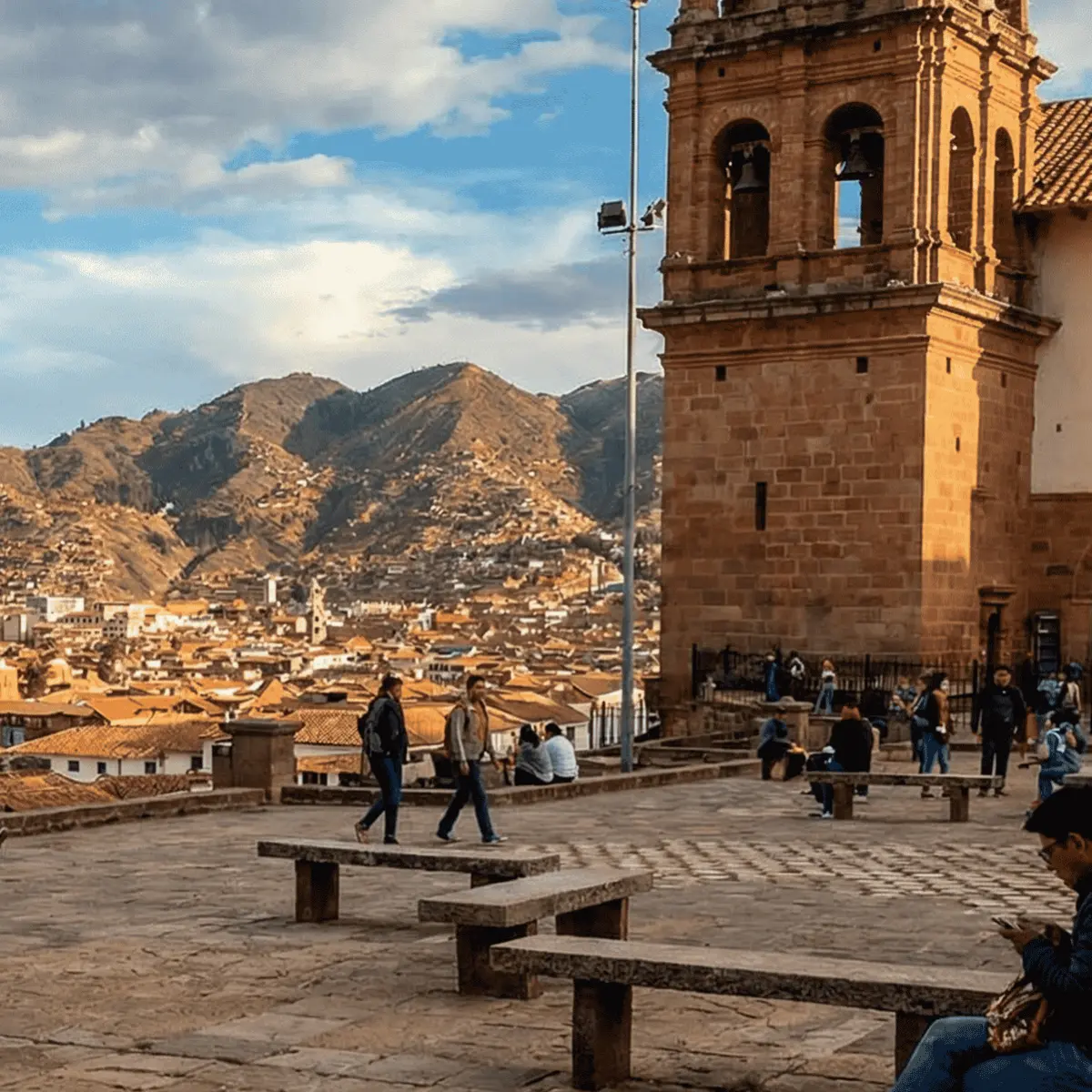
Descending a bit in altitude but gaining architectural detail, we find San Cristóbal. Unlike other Cusco viewpoints that can feel distant, San Cristóbal makes you feel like you are “over” the city, almost floating above the bell towers.
The Legacy of Qolqampata
This lookout sits on what was the palace of Qolqampata, attributed to the first Inca, Manco Cápac. The plaza in front of the San Cristóbal church preserves Inca walls of exquisite craftsmanship. By visiting this site, you are stepping on the home of the founding royalty. It is this mix of archaeology and panoramic views that makes it one of the Cusco viewpoints with the greatest cultural richness.
A Different Angle
The perspective from here is frontal towards the Cathedral. It is the perfect place to understand the verticality of Cusco. You will see how the houses climb the hills in a challenge to gravity. Furthermore, the esplanade is usually quiet, frequented by locals and the occasional musician playing the quena (flute), giving it an atmosphere of authenticity often missing in other Cusco viewpoints.
Route Recommendation
The descent from San Cristóbal towards the Plaza de Armas via Calle Resbalosa is an adventure in itself. It is a steep, cobblestone slope flanked by old mansions that offers unique visual windows. No guide to Cusco viewpoints would be complete without recommending this downhill walk.
3. San Blas Viewpoint: The Bohemian Window
San Blas is the neighborhood of artisans, painters, and dreamers. Its viewpoint reflects exactly that soul. While it is not the highest of the Cusco viewpoints, it is undoubtedly the most romantic and aesthetic.
The Urban Environment
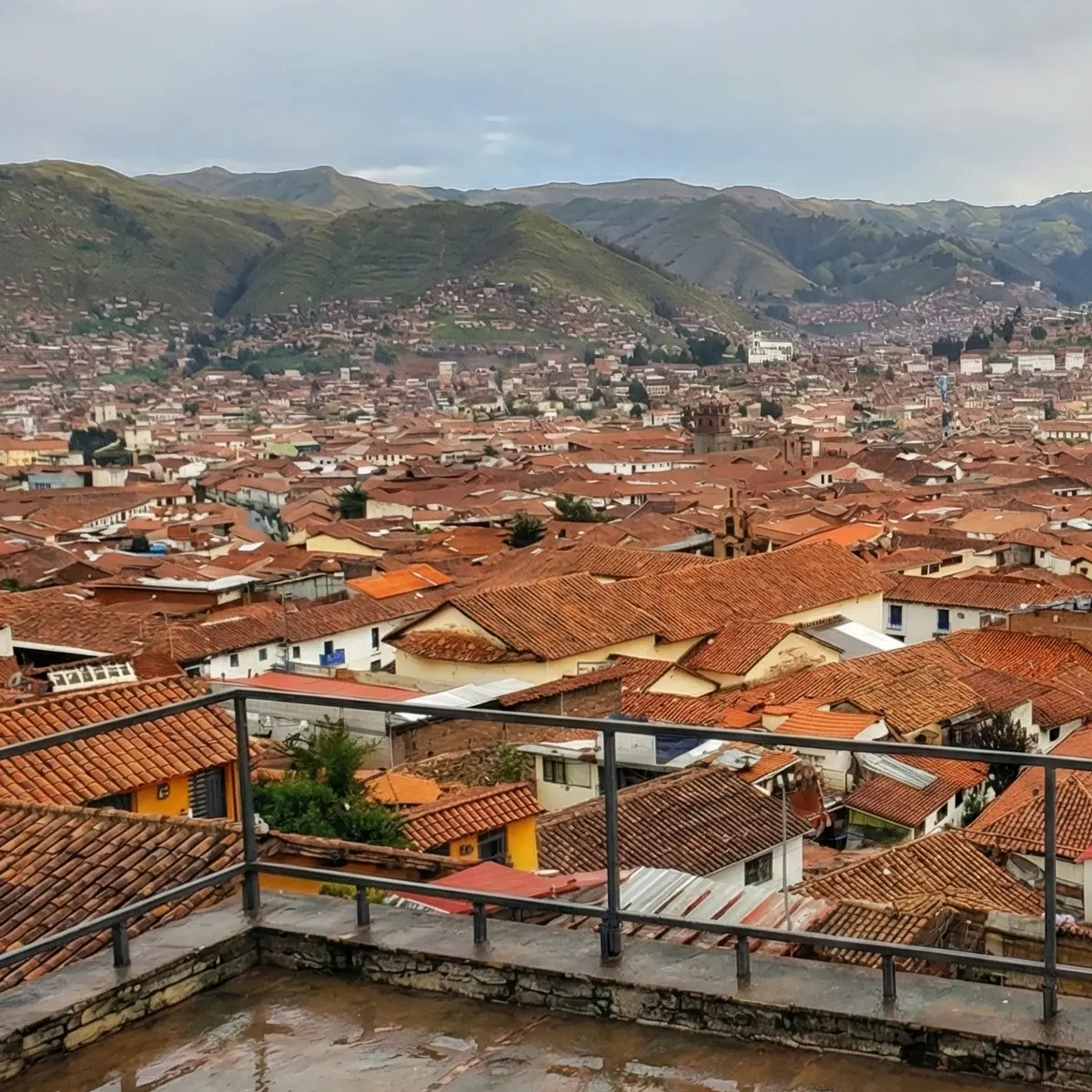
What makes this lookout unique is its context. To reach it, you must cross the Cuesta de San Blas, passing art galleries, imagery workshops, and specialty coffee shops. The viewpoint is a wide plaza, recently remodeled, with fountains and benches. It is one of the few Cusco viewpoints designed specifically for rest and socializing, not just for quick observation.
The View: Textures and Colors
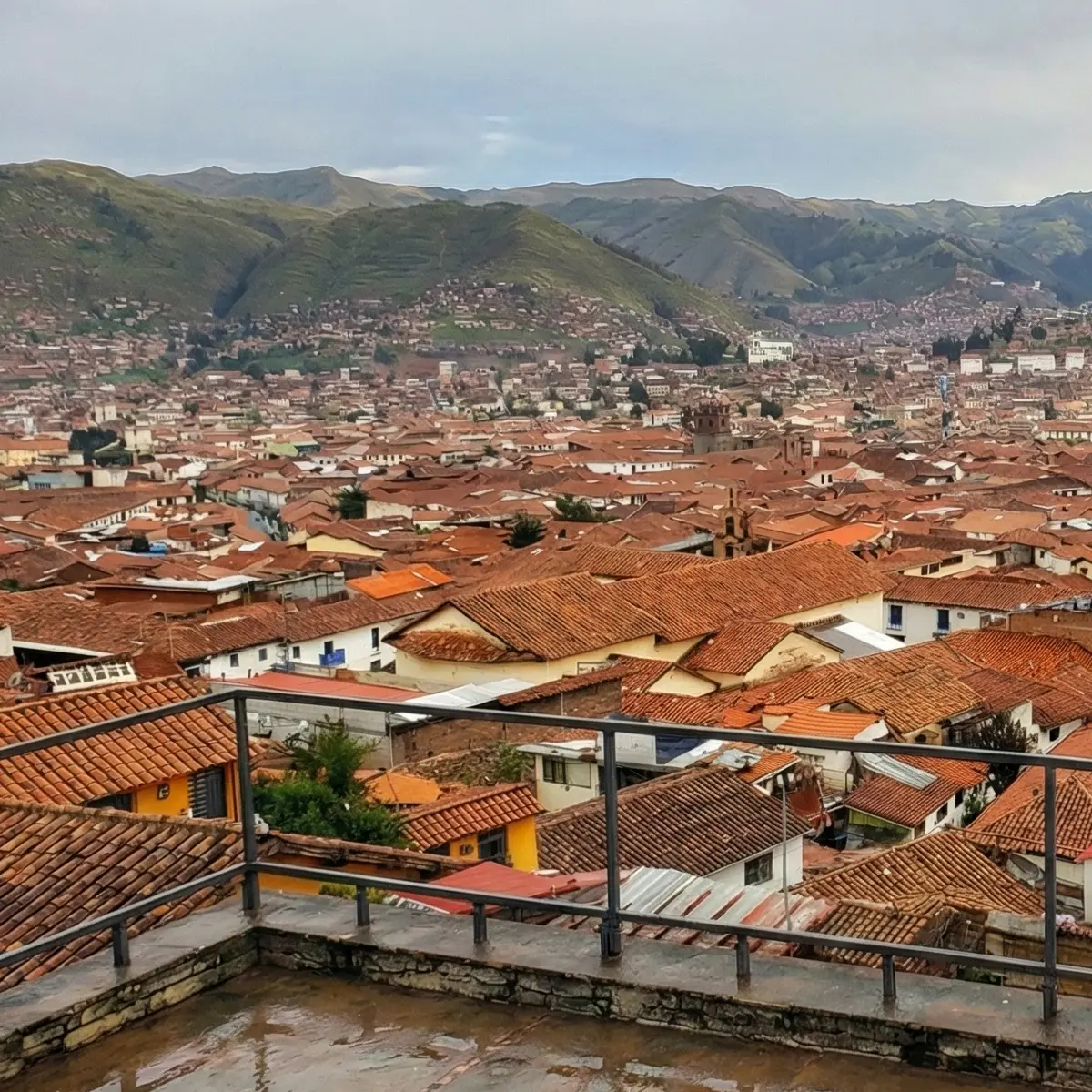
From here, the view focuses on the rooftops. You will be able to appreciate the “skin” of Cusco: thousands of baked clay tiles that have aged with the sun and rain. It is a more intimate view. You don’t see the whole city; you see the detail, the proximity of the church towers, and the life of the interior patios. For lovers of details, San Blas stands out among the Cusco viewpoints.
Insider Tip
After taking photos, don’t leave immediately. Sit at Limbus Restobar or a nearby café with a terrace. Enjoying a Pisco Sour while watching the sun go down from this spot elevates the experience of Cusco viewpoints to a gastronomic and sensory level.
4. Santa Ana Viewpoint: The Silent Watchtower
If you are the type of traveler who flees crowds and looks for the “B-side” of destinations, Santa Ana is your place. Of all the Cusco viewpoints mentioned in this list, this is the least visited by mass tourism, giving it an air of exclusivity and peace.
The Historic Gateway
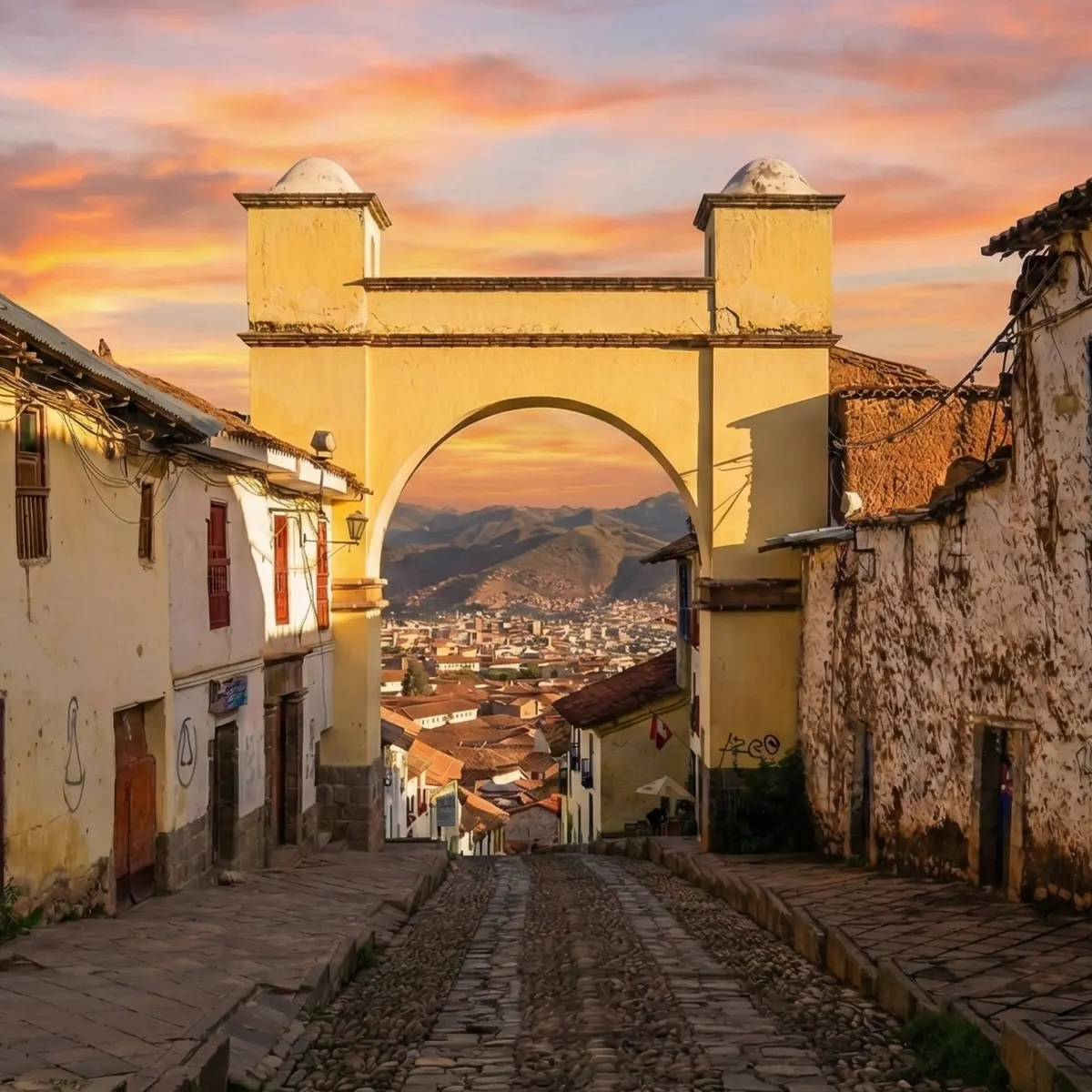
Formerly, Santa Ana was the main entrance to the city for those arriving from the Chinchaysuyo (the north and the coast). It is a traditional, working-class, and deeply Cusqueñan neighborhood. Climbing up here is to enter the real life of the city, far from souvenir shops. For this authenticity, Santa Ana deserves a place of honor among the best Cusco viewpoints.
An Unprecedented Perspective
Santa Ana’s location, on the opposite side of San Blas, offers a reverse angle. You see the city from west to east. This means that sunrises here are spectacular, with the sun rising behind the mountains in front of you, illuminating the valley little by little. It is one of the preferred Cusco viewpoints for documentary photographers looking to capture everyday essence.
The Physical Challenge
Arriving requires climbing the Cuesta de Santa Ana. It is steep and demanding, but every step takes you further away from tourist noise. Upon arriving at the plaza in front of the church (which holds valuable anonymous colonial paintings), silence is the prize. It is, perhaps, the most contemplative of the Cusco viewpoints.
5. Pachacútec Monument: The Modern Colossus
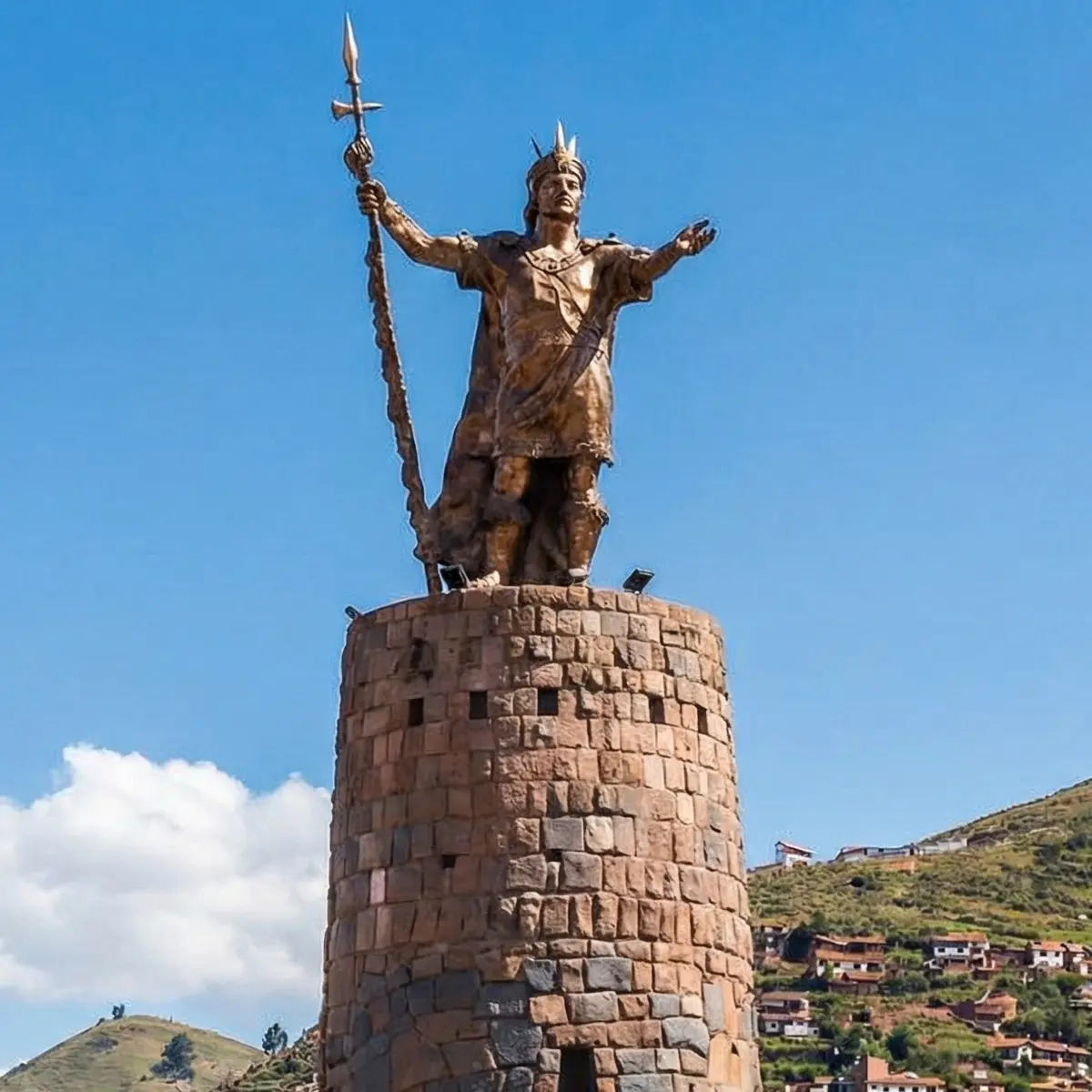
We leave the historic center to explore a structure that pays homage to the architect of the empire: the Inca Pachacútec. This is not a natural lookout, but a stone tower built by man, which differentiates it from the rest of the Cusco viewpoints.
History and Modernity
Located at the Óvalo Pachacútec, this cylindrical stone structure supports a huge bronze statue of the Inca. It is a transition zone between tourist Cusco and modern, commercial Cusco. Including this point in your list of Cusco viewpoints will allow you to see a facet of the city that many ignore: its contemporary urban development.
360-Degree Vision
Upon climbing to the top of the tower, the view is circular. To the north, you see the Historic Center huddled at the foot of the hills; to the south, the expansion of the modern city. It is one of the most educational Cusco viewpoints, as inside it houses a museum that explains the expansion of the empire and the role of Pachacútec. It is a view + history on a single ticket.
Access and Tips
Unlike the other Cusco viewpoints which are free (except for transport), this one requires an entrance fee (included in the Cusco Tourist Ticket). It is easy to reach by taxi or bus. It is ideal to visit if you are on your way to the bus terminal or if you have a particular interest in the political history of the Incas.
Practical Tips for Your Viewpoint Route
Exploring the Cusco viewpoints requires some planning to avoid setbacks, especially considering the altitude. Here is a logistical guide to make your experience perfect.
1. The Altitude Factor (Soroche)
Remember that Cusco is at 3,400 meters above sea level, and some lookouts like Cristo Blanco are even higher (almost 3,600 m).
- Acclimatization: Do not try to visit all the Cusco viewpoints on the first day. Leave this activity for the second or third day.
- Pace: Walk slowly. In Cusco, rushing is the enemy of oxygen.
- Hydration: Carry water and coca candies.
2. Security and Schedule
Although Cusco is a safe city, some viewpoints (like areas around Santa Ana or dark parts of San Cristóbal) can be lonely at night.
- Golden Rule: Visit the more distant Cusco viewpoints during the day or take a door-to-door taxi if it is night.
- San Blas and Plaza de Armas: They are safe to walk at night, but always stay alert with your camera equipment.
3. The Ideal Photographic Gear
To capture the magic of the Cusco viewpoints, we recommend:
- A light tripod: Vital for night photos and keeping ISO low.
- Polarizing filter: Helps highlight the deep blue of the highland sky and reduces glare on rooftops.
- Extra batteries: Cold and altitude can drain batteries faster.
4. Suggested Itinerary: “The Route of Sun and Stone”
If you want to optimize your time and see several Cusco viewpoints in a single efficient tour:
- 03:30 PM: Take a taxi to Cristo Blanco. Explore the area and enjoy the panoramic daytime view.
- 04:30 PM: Walk down (10 min) to San Cristóbal. Visit the church and observe how the light changes over the Plaza de Armas.
- 05:15 PM: Descend via Calle Resbalosa until you reach near the Plaza.
- 05:45 PM: Walk towards the San Blas neighborhood. Arrive just in time for the “Blue Hour” (after sunset).
- 06:30 PM: End your route of Cusco viewpoints dining at a restaurant with a view in San Blas, celebrating the day.
Conclusion: One City, A Thousand Perspectives
Cusco is inexhaustible. You can visit it ten times and always find a new corner. But there is something definitive in the experience of climbing to its heights. The Cusco viewpoints act as a balm for the traveler: they stop time, silence the noise of modernity, and bring you face to face with history.
From the sacred majesty of Cristo Blanco to the bohemian intimacy of San Blas; from the authenticity of Santa Ana to the imposing presence of Pachacútec. Each of these points tells a different chapter of the same novel.
Do not make the mistake of living Cusco only at street level. Dare to climb. Let your lungs fill with Andean air and your eyes keep the eternal postcard of a city that, even centuries later, continues to touch the sky.The next time someone asks you what to see in the Imperial City, tell them that the real magic is not only in its walls but in the view from its Cusco viewpoints. Are you ready for the ascent? Your camera and your spirit will thank you.
OUR TIKTOK ACCOUNT
BLOG HOME:
https://bestmachupicchutours.com/blog
VISIT OUR SOCIAL MEDIA:
https://www.facebook.com/infocusco