Myths and Legends of Cusco: An Epic Journey Through the Mystery and Magic of the Andes
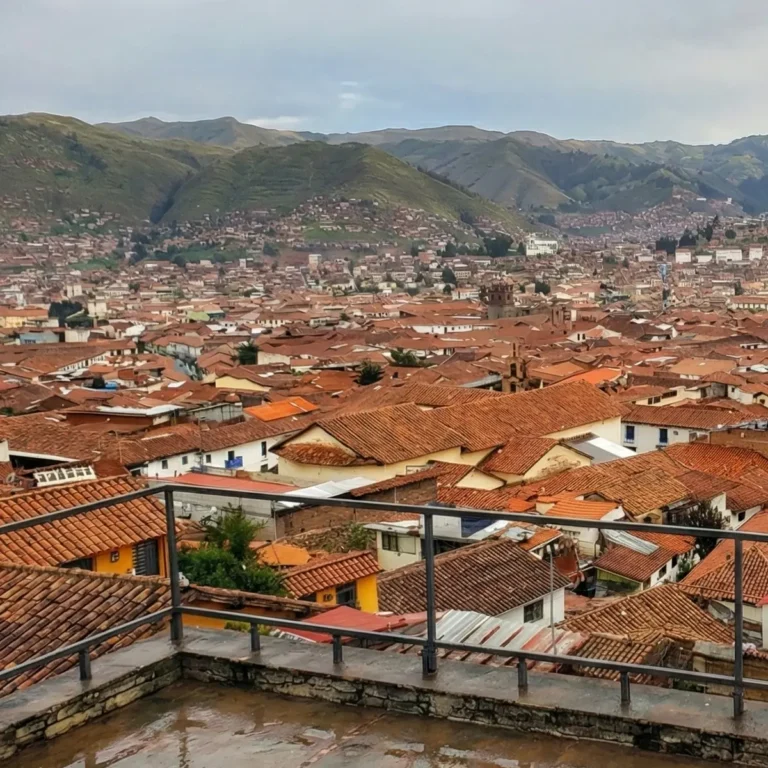
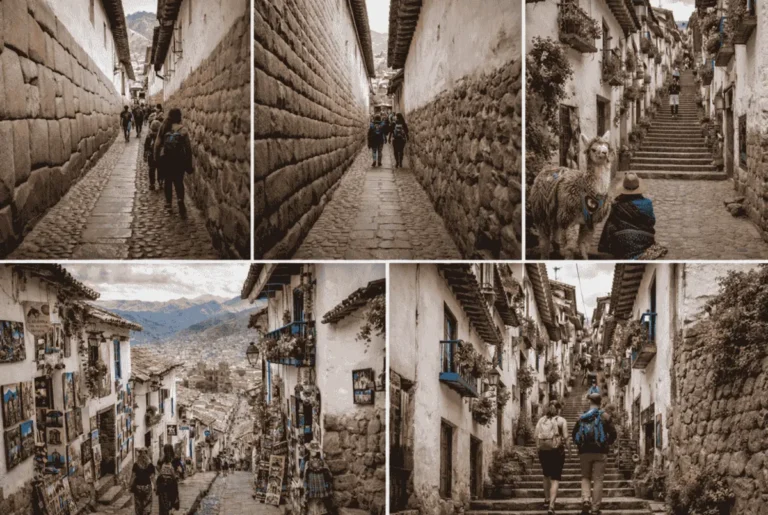
Cusco is not simply a city; it is a living organism that breathes history. Walking through its cobblestone streets, where Inca walls serve as foundations for colonial mansions, is to traverse a blurred timeline where the past and present intertwine. In this corner of the world, located in the pulsating heart of the Peruvian Andes, tangible reality constantly mixes with the supernatural. To truly understand the depth of this millennia-old civilization, it is not enough to admire its architecture; it is imperative to immerse yourself in the myths and legends of Cusco.
These narratives are not simple fairy tales to entertain children before bed. On the contrary, they constitute the backbone of Andean identity. They explain the origin of the universe, the foundation of imperial cities, natural phenomena, and the sacred relationship between human beings and the Pachamama (Mother Earth). Through this comprehensive article, we invite you on a fascinating, almost cinematic journey through the stories that have shaped the spirit of one of the most enigmatic cities on the planet.
The Invisible Soul of the Inca Capital
When travelers arrive at the ancient capital of the Tahuantinsuyo, they are often blinded by the visual magnificence of Machu Picchu or the fortress of Sacsayhuamán. However, there is an invisible layer that coats every stone and every mountain. The myths and legends of Cusco act as a spiritual compass that guides us through the worldview of a culture that learned to dialogue with the stars and the Apus (mountain spirits).
Why do these stories remain valid after five centuries of Western influence? The answer lies in the oral tradition. For generations, grandfathers and grandmothers have transmitted these tales by the warmth of the fire, ensuring that the memory of their ancestors does not fade. By participating in our cultural tours, you too become a guardian of these memories. Discovering the myths and legends of Cusco is, in essence, an act of cultural preservation and a way to honor the wisdom of the ancient inhabitants of these lands.
The Divine Origins: The Foundation of the Empire
To understand current Cusco, we must go back to its mythical beginnings. The foundation of the city is not recorded in notarial documents, but in magical epics that narrate the direct intervention of the gods. There are two main accounts that dominate the collective imagination and are fundamental pillars of the myths and legends of Cusco.
The Odyssey of Manco Cápac and Mama Ocllo

The first and most well-known of these stories transports us to the frigid waters of Lake Titicaca. It is said that the Sun God, Inti, seeing that humanity lived in barbarism, without laws or agriculture, took pity on them. From the foam of the sacred lake, he brought forth a divine couple: Manco Cápac and Mama Ocllo.
Their mission was civilizing. Inti gave them a golden staff with a precise instruction: they were to travel north, and at every place they stopped to rest, they should try to drive the staff into the earth. Wherever the golden staff sank easily would be the chosen place to found the “Navel of the World.”
This narrative is vital within the myths and legends of Cusco because it establishes the divine nature of the Inca rulers. After a long journey full of trials, the couple arrived at Huanacaure Hill. There, the golden staff sank into the fertile soil, disappearing forever. Manco Cápac proceeded to found the city of Cusco, teaching men the arts of agriculture, construction, and war, while Mama Ocllo instructed women in weaving, cooking, and home care. This myth not only explains the geographic location of the city but also legitimizes the social order and the complementary duality (yanantin) that governed Inca life.
The Tragedy and Glory of the Ayar Brothers
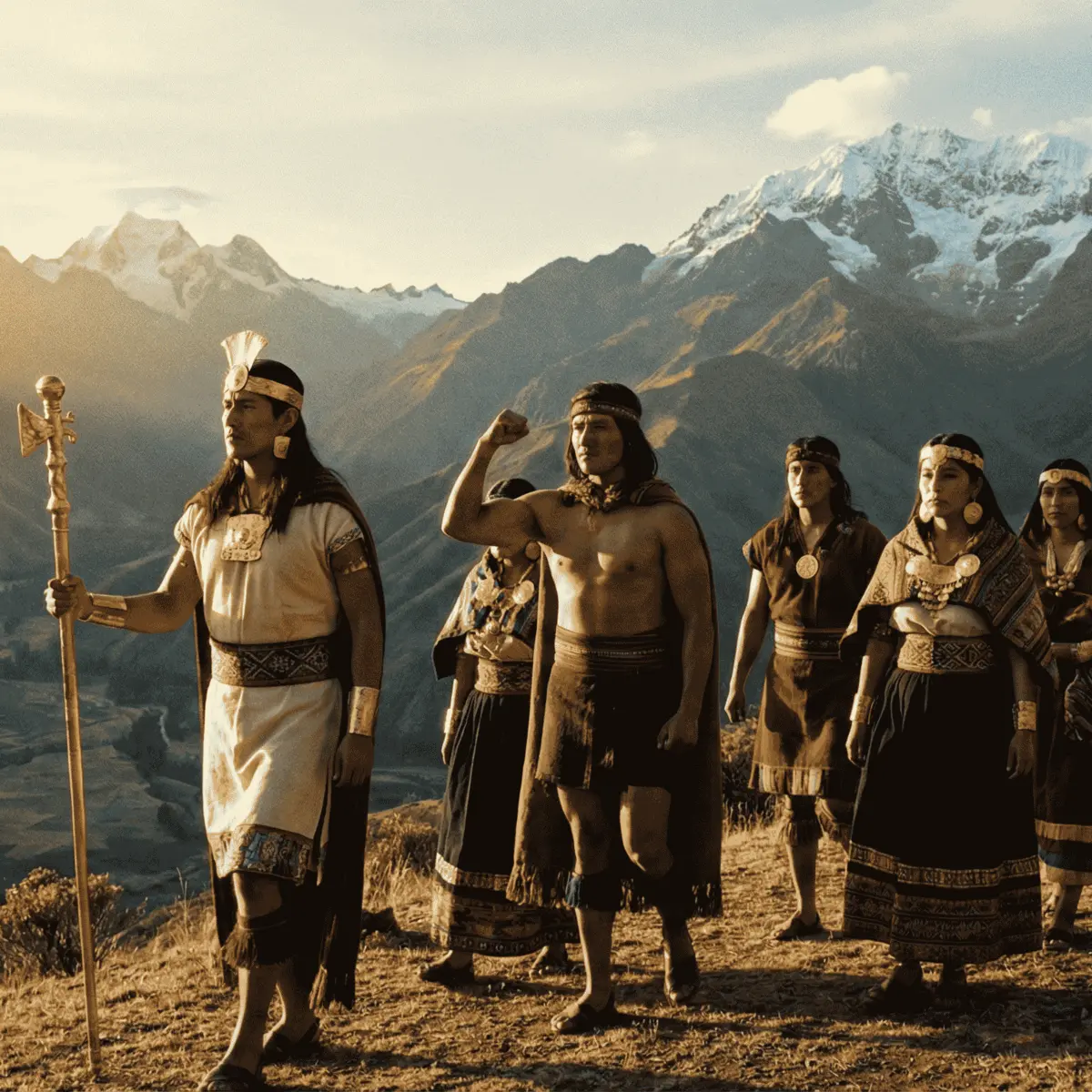
If the story of Manco Cápac is serene and civilizing, the myth of the Ayar Brothers is epic, tragic, and full of elemental magic. According to this account, which enormously enriches the compendium of myths and legends of Cusco, four brothers and their four wives emerged from the cave of Pacaritambo, on Tamputoco Hill. Their names were Ayar Manco, Ayar Cachi, Ayar Uchu, and Ayar Auca, accompanied by Mama Ocllo, Mama Huaco, Mama Ipacura, and Mama Raua.
This legend is a representation of the struggle for power and the natural selection of the leader. Ayar Cachi, the strongest of all, had the power to knock down mountains with his sling. His brothers, fearful and envious of his excessive strength, tricked him into returning to the cave to retrieve some sacred vessels, trapping him there forever.
The journey continued, and the remaining brothers transformed into sacred elements. Ayar Uchu turned into stone to become a principal huaca (sacred place). Ayar Auca, upon reaching the Cusco valley, grew wings and flew to perch on a spot where he also turned to stone, marking the possession of the land. Only Ayar Manco remained (who would later become Manco Cápac), who founded the city. This tale is one of the most complex among the myths and legends of Cusco, as it symbolizes the deep connection between ancestors, the land, and stone, suggesting that the founders never died, but integrated into the eternal landscape of the Andes.
Inti: The Sun Father and His Eternal Legacy
One cannot speak of Cusco spirituality without mentioning Inti, the Sun God. He is not just a character in the stories; he is the absolute protagonist of Inca life. In the context of the myths and legends of Cusco, Inti is the source of all life, the benevolent father who watches over his domains from the sky.
The relationship between the Incas and the sun went beyond worship; it was a relationship of kinship. The Sapa Inca (emperor) was considered the “Son of the Sun.” This belief is manifested in the architecture of the Qorikancha (Golden Enclosure), the most important temple of the empire, whose walls were covered with sheets of gold to reflect Inti’s light.
Legends tell that during eclipses, the sun was angry or sick, causing great fear in the population. Massive rituals were performed to “revive” the sun and prevent eternal darkness from falling upon the world. Even today, the festival of Inti Raymi (Festival of the Sun) revives these ancient traditions, demonstrating that the myths and legends of Cusco are not things of the past, but living celebrations that attract thousands of visitors every year.
The Mystery of the Chincanas: The Subworld of Cusco
Cusco not only has stories about what happens under the sunlight but also about what happens in the darkness of the subsoil. One of the most persistent and terrifying myths and legends of Cusco is that of the “Chincanas” (labyrinths or places to get lost).
It is said that there is a vast network of subterranean tunnels connecting the fortress of Sacsayhuamán with the Qorikancha and the Cathedral of Cusco. According to oral tradition, these tunnels were used by the Incas to hide their treasures from the greed of the Spanish conquistadors. The “Chincana Grande” and the “Chincana Chica” are known entrances in the Sacsayhuamán area.
The legend recounts that many adventurers, treasure hunters, and curious people have entered these caves never to exit again. There is talk of a group of students who, decades ago, ventured into the depths with a rope. Days later, only one managed to exit from under the main altar of the church of Santo Domingo (built over the Qorikancha), aged, delirious, and holding a solid gold corn cob before dying. This type of tale adds an air of gothic mystery to the myths and legends of Cusco, warning locals and tourists about the respect one must have for sacred and unknown places.
The Myth of Inkari: The Hope of Return
Among all the narratives, there is one that possesses a strong messianic component and cultural resistance: the myth of Inkari. This story emerged as a response to the trauma of the conquest and the execution of the last Inca. It is, without a doubt, one of the most moving myths and legends of Cusco.
The account holds that when the Spanish captured and beheaded the Inca (often fusing the figures of Atahualpa and Túpac Amaru I), they separated his head from his body. The head was buried in Cusco (or in Lima, depending on the version), while the body lies hidden beneath the earth.
But Inkari is not dead. The legend says that the earth is regenerating him. Slowly, his body is growing downwards and his head upwards. The day the head and the body reunite, the Inca will awaken, break the earth, and restore the Andean order, expelling the invaders and returning harmony to the world. Inkari represents the resilience of the Quechua people. Listening to this tale is understanding that the myths and legends of Cusco are also vehicles of political and social hope, keeping the utopia of an indigenous rebirth alive.
Paititi: The Andean El Dorado
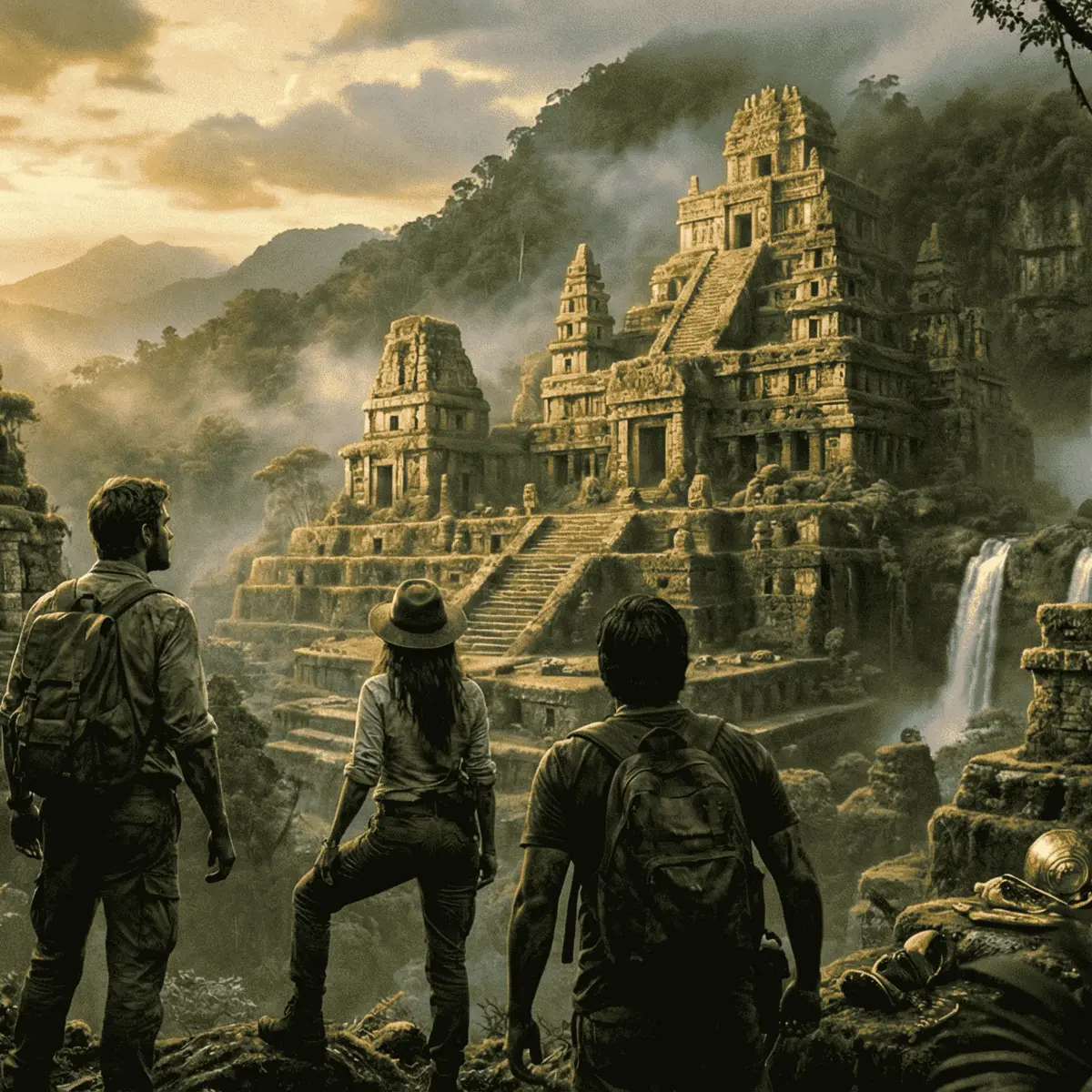
If there is a legend that has driven expeditions, cost lives, and spent fortunes, it is that of Paititi. Often confused with “El Dorado,” Paititi is a lost city, supposedly located east of the Andes, in the thick of the Amazon rainforest of Manu or Madre de Dios.
Within the universe of the myths and legends of Cusco, Paititi is the last refuge of the Inca nobility. It is told that, facing the imminent fall of Cusco into Spanish hands, thousands of Incas loaded their most precious treasures, including the great golden solar disk of the Qorikancha, and fled into the jungle, where they founded a secret city that remains hidden by magic and vegetation.
Is it reality or fiction? Ancient chroniclers and modern explorers have claimed to see signs, stone paths entering the jungle, and mysterious petroglyphs. Paititi remains the great archaeological enigma of South America. For the traveler, knowing that a few hundred kilometers from Cusco an intact city of gold could exist adds a layer of incomparable excitement. The myths and legends of Cusco remind us that, in this satellite-mapped world, unfathomable mysteries still exist waiting to be discovered.
The 12-Angled Stone and the Secrets of Architecture
Not all myths are about gods or lost cities; some reside in the city’s architecture itself. On Hatun Rumiyoc Street lies the famous 12-Angled Stone. The perfection of its fit, where not even a sheet of paper can enter, has generated multiple interpretations that form part of the myths and legends of Cusco.
Local guides and elders recount that if that stone were removed, the entire wall would collapse, and even the structure of the entire city would be compromised. Beyond engineering, there is a spiritual reading: the stone was not carved only with tools but softened with extracts of secret plants that the Incas knew to mold rock as if it were clay.
Another urban legend suggests that the arrangement of stones in certain walls forms figures of hidden animals (pumas, snakes, llamas) that can only be seen under certain conditions of light and shadow. These tales turn a simple walk through the streets into a visual treasure hunt, where the myths and legends of Cusco are literally written on the walls that surround us.
Huacaypata and the Lament of the Bells
The Plaza de Armas of Cusco, formerly known as Huacaypata (place of crying or meeting), is the setting for numerous colonial stories. One of the most resonant involves the “María Angola,” the monumental bell of the Cathedral of Cusco.
It is said that to cast it, the faithful of the city threw kilos of gold and jewelry into the crucible, which gave it its deep and characteristic sound that could be heard tens of kilometers away. However, the myths and legends of Cusco also speak to us of spectral beings and the condemned. It is said that on full moon nights, processions of suffering souls dressed in ancient habits can be seen wandering through the atrium of the Cathedral, paying eternal penance for forgotten sins.
This fusion of Catholic faith with Andean mysticism creates a unique folklore. Cusco is a city where churches were built over Inca temples, and that overlap is not only physical but spiritual. Stories of colonial ghosts coexist with Andean goblins (Muki) and lake sirens, enriching the tapestry of the myths and legends of Cusco.
The Connection with Nature: Apus and Cochas
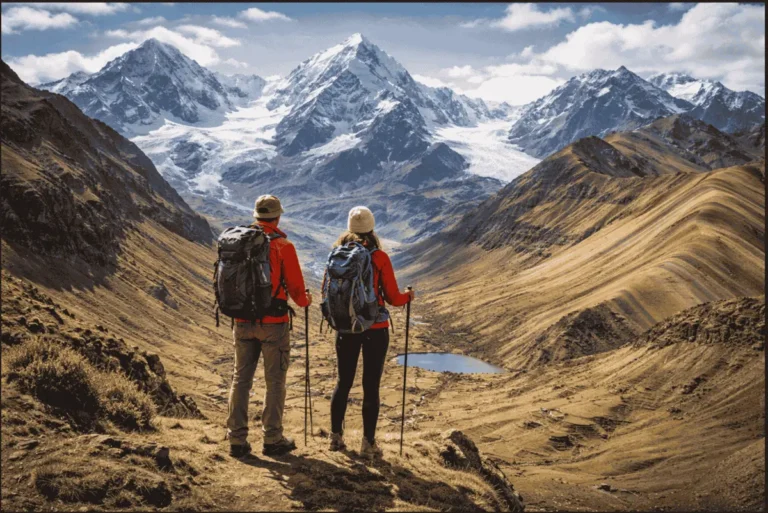
For the Andean man, nature is not a resource; it is a deity. The mountains (Apus) are the community’s protectors. Apu Ausangate, Salkantay, and Huanacaure are viewed as wise and powerful “grandfathers.” The lagoons (Cochas) like Humantay or Titicaca are considered female entities and origins of life.
The myths and legends of Cusco teach us that one must ask permission and offer respect before entering the domains of an Apu. From there comes the tradition of the “payment to the earth” or despacho, a ritual still practiced with fervor. Ignoring these entities can bring bad luck or “soroche” (altitude sickness), seen not only as a physical condition but as a rejection by the mountain spirit towards the disrespectful visitor. Understanding this transforms a trekking hike into a sacred pilgrimage.
Ukukus: The Guardians Between Two Worlds
In the festivity of Qoyllur Rit’i, one of the most extreme and sacred pilgrimages in the Andes, the Ukukus appear. They are dancers dressed as bears, with wool masks and high-pitched voices. According to the myths and legends of Cusco, the Ukuku is the son of a woman and a bear, possessing the strength of both worlds.
They are the only ones authorized to climb up to the sacred glaciers to bring back blocks of ice, which are considered medicinal. They are feared and respected because they serve as mediators between men and the Apus, and also as “police” of the festival, punishing with their whips those who disrespect tradition. The figure of the Ukuku embodies Andean duality: he is mischievous but sacred, animal but human. His presence in the festivities is a constant reminder that legends walk among us.
Why Immersing Yourself in These Stories Transforms Your Trip
It is possible to visit Cusco as a conventional tourist: take the photo, buy the souvenir, and leave. But doing so would mean missing half the experience. Knowing the myths and legends of Cusco changes your perception of the environment.
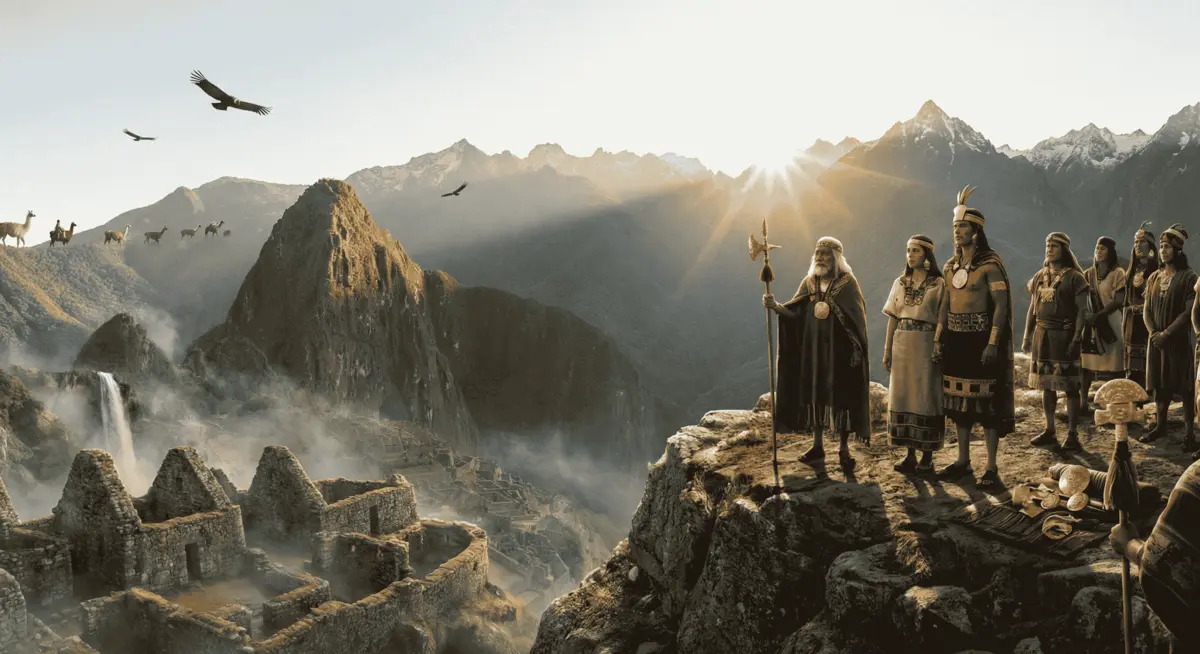
- When you see the sunrise at Machu Picchu, you won’t just see light; you will remember Inti greeting his children.
- When you walk through the Sacred Valley, you will feel the presence of the Ayar Brothers in the mountains.
- When you touch an Inca wall, you will think of the magic that softened the stone.
Our tour packages are meticulously designed to weave these narratives into every step of the way. We do not limit ourselves to reciting cold dates and archaeological data. Our guides are passionate storytellers, heirs to this oral tradition, trained to make the myths and legends of Cusco come alive before your eyes.
Imagine sitting in front of the ruins of Ollantaytambo while listening to the legend of General Ollanta and his forbidden love for the Inca’s daughter, a story of passion that defied the empire itself. Or walking along the shores of Piuray Lagoon and hearing about the golden siren that inhabits its depths. These experiences add a color and emotional texture to your trip that no printed guidebook can equal.
Plan Your Mystical Adventure
Cusco awaits you with open arms and its secrets ready to be revealed. Whether you travel alone, as a couple, or as a family, there is a tale waiting to resonate with you. The myths and legends of Cusco are universal because they deal with eternal human themes: love, power, nature, hope, and mystery.
By choosing to travel with us, you choose an authentic cultural immersion. We ensure that every archaeological site, every valley, and every temple is presented in all its historical and mythical splendor. Don’t let them tell you half the story; come and live the complete history.
The myths and legends of Cusco are not museum relics; they are the constant heartbeat of a culture that refuses to forget. Allow us to be your guides on this journey into the soul of the Andes. Book your experience today and prepare to discover that, in Cusco, magic is the only reality.
In conclusion, the richness of this destination goes far beyond the visual. It is a territory where sacred geography and ancestral memory converge. At the end of your trip, you will take with you not only photographs but the certainty of having walked on lands where gods and men once coexisted. The myths and legends of Cusco will be, from then on, part of your own history.
OUR TIKTOK ACCOUNT
BLOG HOME:
https://bestmachupicchutours.com/blog
VISIT OUR SOCIAL MEDIA:
https://www.facebook.com/infocusco