Markets in Cusco: Top 5 Places for an Authentic Cultural Immersion, Tips & More
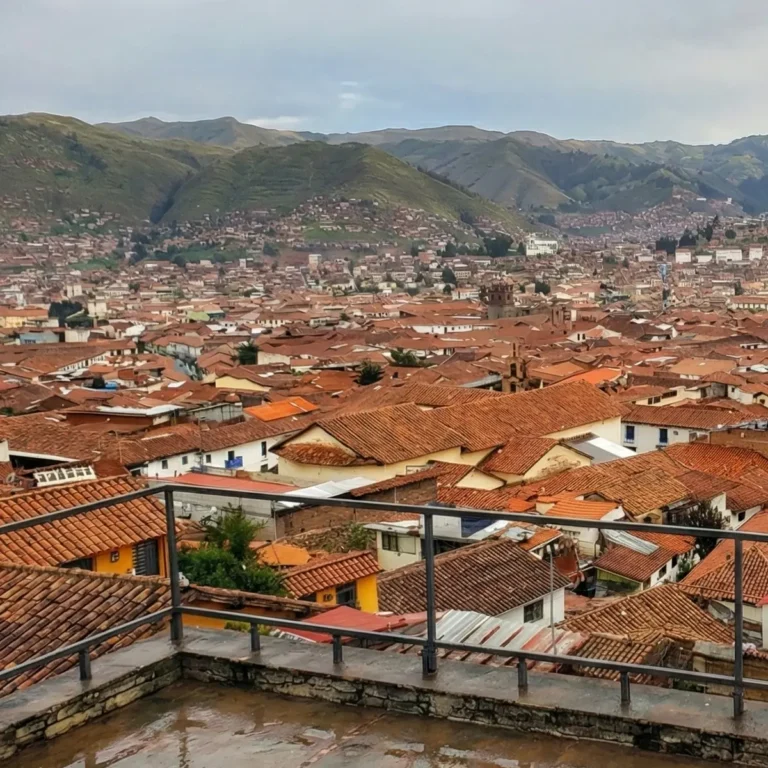
Cusco, the ancient capital of the Inca Empire, is a city that breathes history in every one of its stones. However, beyond the majesty of Machu Picchu, the walls of Sacsayhuamán, or the colonial architecture of the Plaza de Armas, there exists a vibrant underworld where the true essence of Andean culture manifests daily. We are referring, of course, to the markets in Cusco.
If you truly wish to understand the soul of this region, you must momentarily step away from the conventional tourist circuits and immerse yourself in the hustle, aromas, and colors of its supply centers. Visiting the markets in Cusco is not simply a shopping activity; it is an anthropological ritual, a sensory experience, and a unique opportunity to connect with the local population, their customs, and their ancestral gastronomy.
In this extensive and detailed article, we will take you by the hand through the 5 most important markets in Cusco, exploring their secrets, what to eat, what to buy, and how to live this experience like a true local.
Why are the markets in Cusco so important?
Before diving into the list of the best places, it is fundamental to understand the context. In the Andean worldview (cosmovisión), the exchange of products has always been vital. Although currency is used today, the spirit of “barter” (trueque) and community remains alive in the aisles of these enclosures.
The markets in Cusco are the convergence point of Peruvian biodiversity. Products arrive here from the coast, exotic fruits from the Amazon rainforest, and, of course, millennia-old tubers and grains from the highlands. As you walk through them, you are seeing thousands of years of agricultural history unfolded before your eyes. From the more than 3,000 varieties of potato to the giant corn of the Sacred Valley, these markets are living museums of Inca nutrition.
1. San Pedro Central Market: The pulsating heart of the city
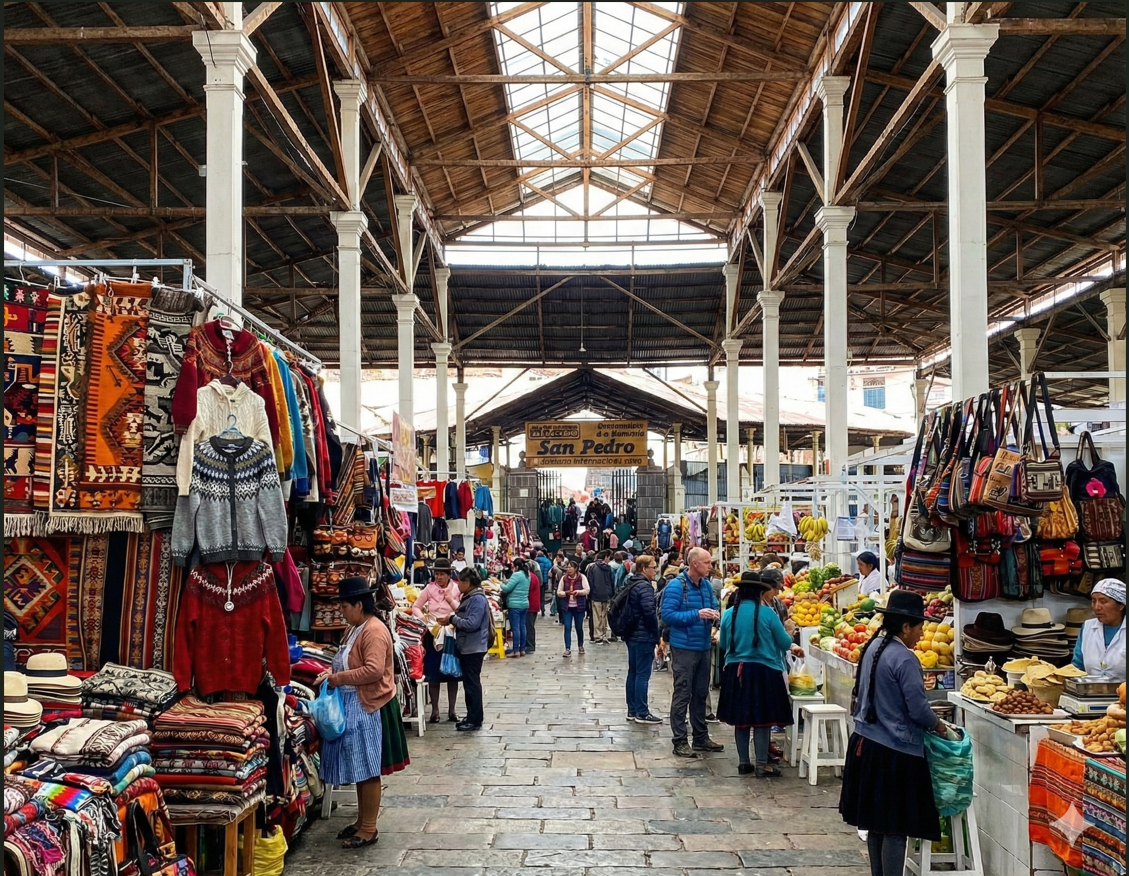
Topping any list on experiential tourism, we find the San Pedro Central Market. When speaking of markets in Cusco, this is the undisputed reference, both for its strategic location and its history.
History and Architecture
Located a few blocks from the Plaza de Armas, its structure is impressive. It is said that the roof design was influenced by Gustave Eiffel (the same one from the tower in Paris), which gives it an industrial yet colonial air. It is the oldest market in the city and has served as the main supply center for generations.
What to see and experience?
Entering San Pedro is receiving a jolt of energy. The market is divided into very clear sections that facilitate the tour, although it is easy to get lost in the crowd.
- The Juice Section: Perhaps the friendliest and most colorful zone. Dozens of stalls exhibit mountains of fresh fruit. The “caseras” (vendors) will call out to you affectionately to offer you fruit blends you have perhaps never seen.
- The Meat Zone: This area is for those with strong stomachs. Unlike Western supermarkets, everything is on display here: cow heads, trotters, organs, and the famous cuy (guinea pig) ready to be cooked. It is a raw and real sample of the local diet.
- Herbs and Medicines: One of the most fascinating parts of the markets in Cusco is their connection with natural medicine. In San Pedro, you will find herbs for everything: from altitude sickness to remedies for “mal de amores” (heartbreak).
Gastronomy: What to try?
If you are hungry, this is your place. Caldo de gallina (hen soup) is the star dish, served hot and perfect for acclimatizing to the altitude. You will also find the traditional “Choclo con queso” (giant boiled corn with a piece of salty cheese).
Location and Access
It is located opposite the San Pedro train station, on Avenida Cascaparo. It is impossible to miss. Its proximity to the historic center makes it the most accessible of all the markets in Cusco.
2. San Blas Market: Bohemian, Artistic, and Cozy
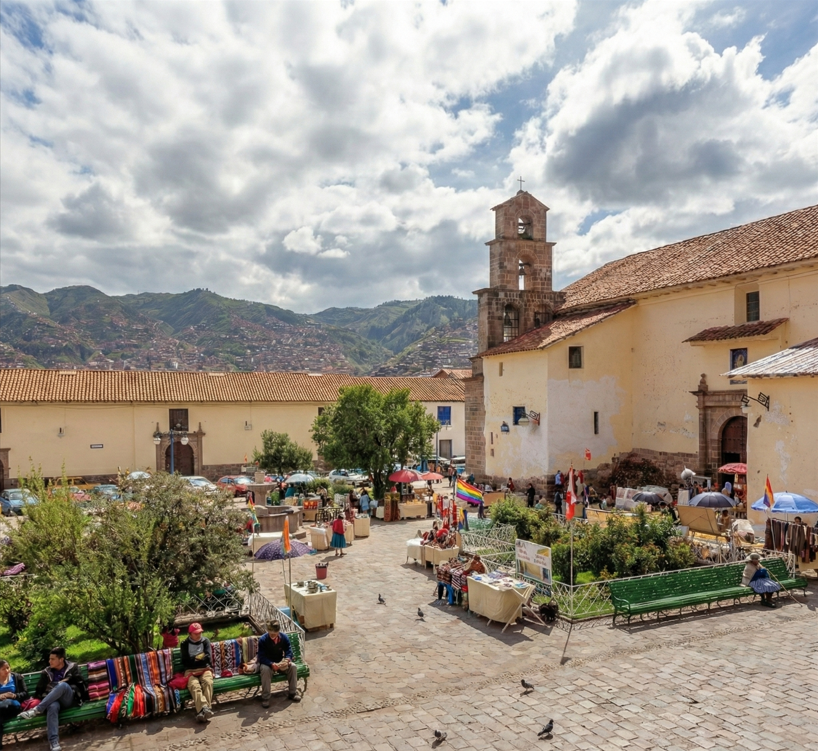
If San Pedro is wonderful chaos, the San Blas Market is the quiet refuge. Located in the artisans’ neighborhood, this market has a completely different personality. It is small, clean, and has a much more relaxed vibe, which notably differentiates it from other markets in Cusco.
The Neighborhood Atmosphere
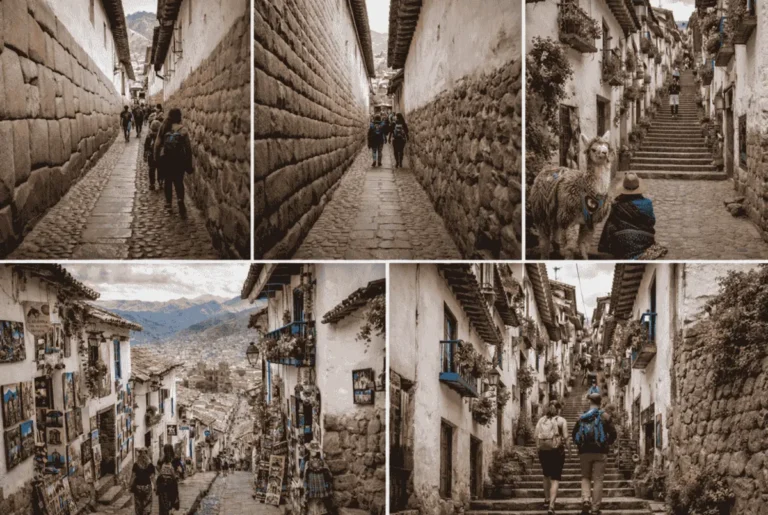
San Blas is known for its narrow, steep, white-stone streets. It is the home of artists, musicians, and foreigners who fell in love with the city. The market reflects this: it is a space where tradition meets new organic and healthy trends.
The Gastronomic Offer
The San Blas Market has earned legendary fame for its food. Here, the offering feels a bit more “gourmet” within the traditional.
- The Famous Sandwiches: You cannot visit this place without trying their sandwiches. They have curious names like “Machu Picchu” or “Huayna Picchu,” and are packed with avocado, cheese, egg, tomato, and homemade sauces. They are cheap and delicious.
- Vegetarian Options: Given the influx of tourists in the neighborhood, this is one of the best markets in Cusco to find vegetarian and vegan options, such as falafels or very elaborate fruit salads.
Crafts and Shopping
Being in an artists’ neighborhood, the surroundings of the market are full of galleries. Inside the market, you can buy excellent quality fruits, fresh cheeses, and small handicrafts. It is the ideal place to buy provisions if you are staying in an apartment in the area.
Location
It is situated in the heart of the San Blas neighborhood. Getting there requires a bit of physical effort, as you have to climb the famous Cuesta de San Blas from the Plaza de Armas, which takes about 10 to 15 minutes, but the views and the experience are worth every step.
3. Wanchaq Market: Authentic Local Life
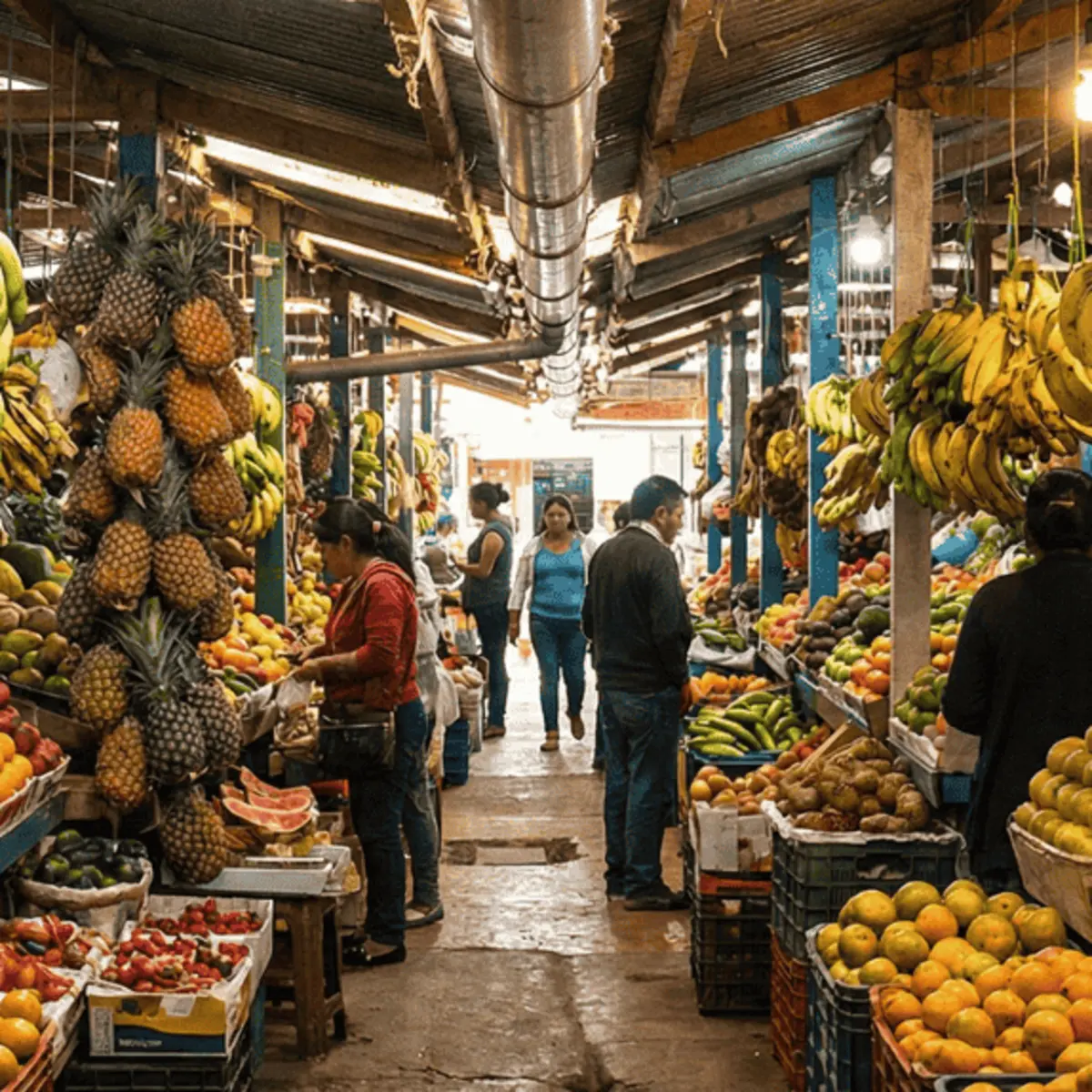
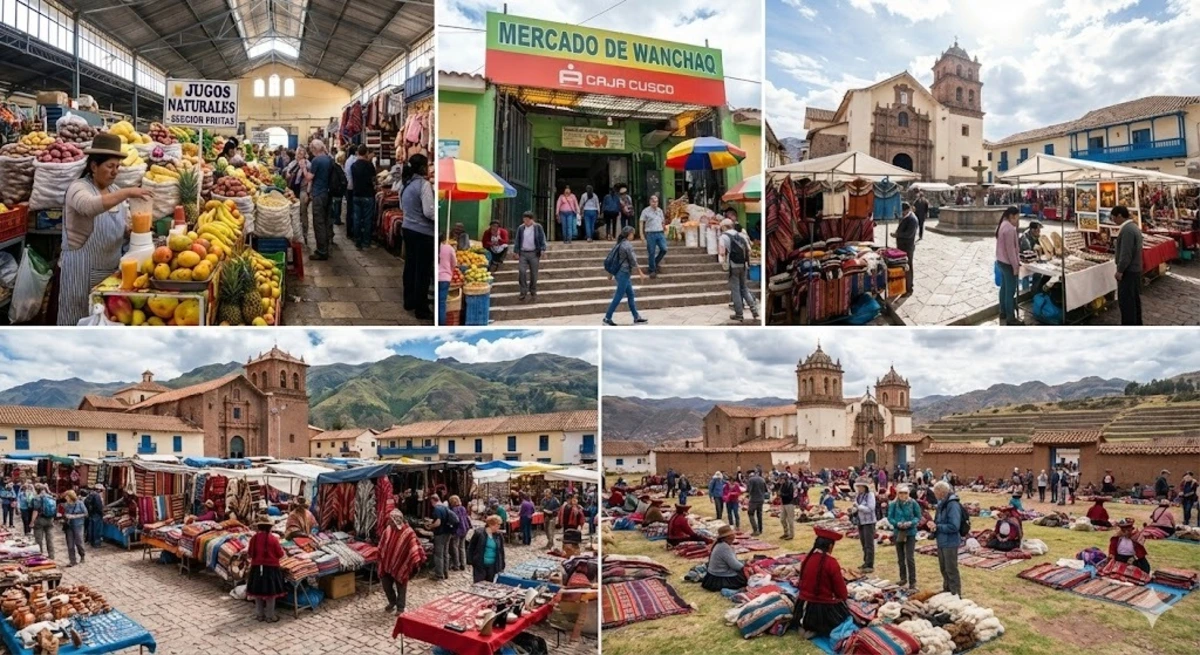
For the traveler looking to step out of the tourist bubble, the Wanchaq Market is the hidden gem. Unlike San Pedro, you will see very few tourists here. It is one of those markets in Cusco where life goes on without poses or filters, focused 100% on the local resident.
An Immersion in Daily Life
Wanchaq is a commercial and residential district. Its market is the place where Cusqueña housewives do their daily shopping. Prices here are usually lower than in the more central markets, and the interaction is purely genuine. If you want to know how much a kilo of potatoes or meat really costs in the city, this is the place to find out.
The Fruit Paradise
Cusco is the gateway to the high jungle, and in Wanchaq, this is evident. The aromas of ripe fruit flood the aisles.
- Exotic Fruits: Here you will find the best of the season. Giant chirimoyas (custard apples), sweet granadillas, creamy lúcumas, and pacay. The vendors are usually very kind and will often give you a taste before buying (the famous “prueba”).
- Flowers: Another distinctive feature of Wanchaq is its flower section. The colors are vibrant and the floral arrangements are very affordable, a sample of the natural beauty surrounding the city.
Location
It is located on Avenida Garcilaso, a bit further from the monumental center but accessible on foot (about 15-20 minutes from the Plaza de Armas walking down Avenida El Sol). Visiting it allows you to walk through a modern area of the city, offering an interesting contrast with the colonial architecture. Among the markets in Cusco, this offers the most realistic view of the current city.
4. Pisac Market: Treasures of the Sacred Valley
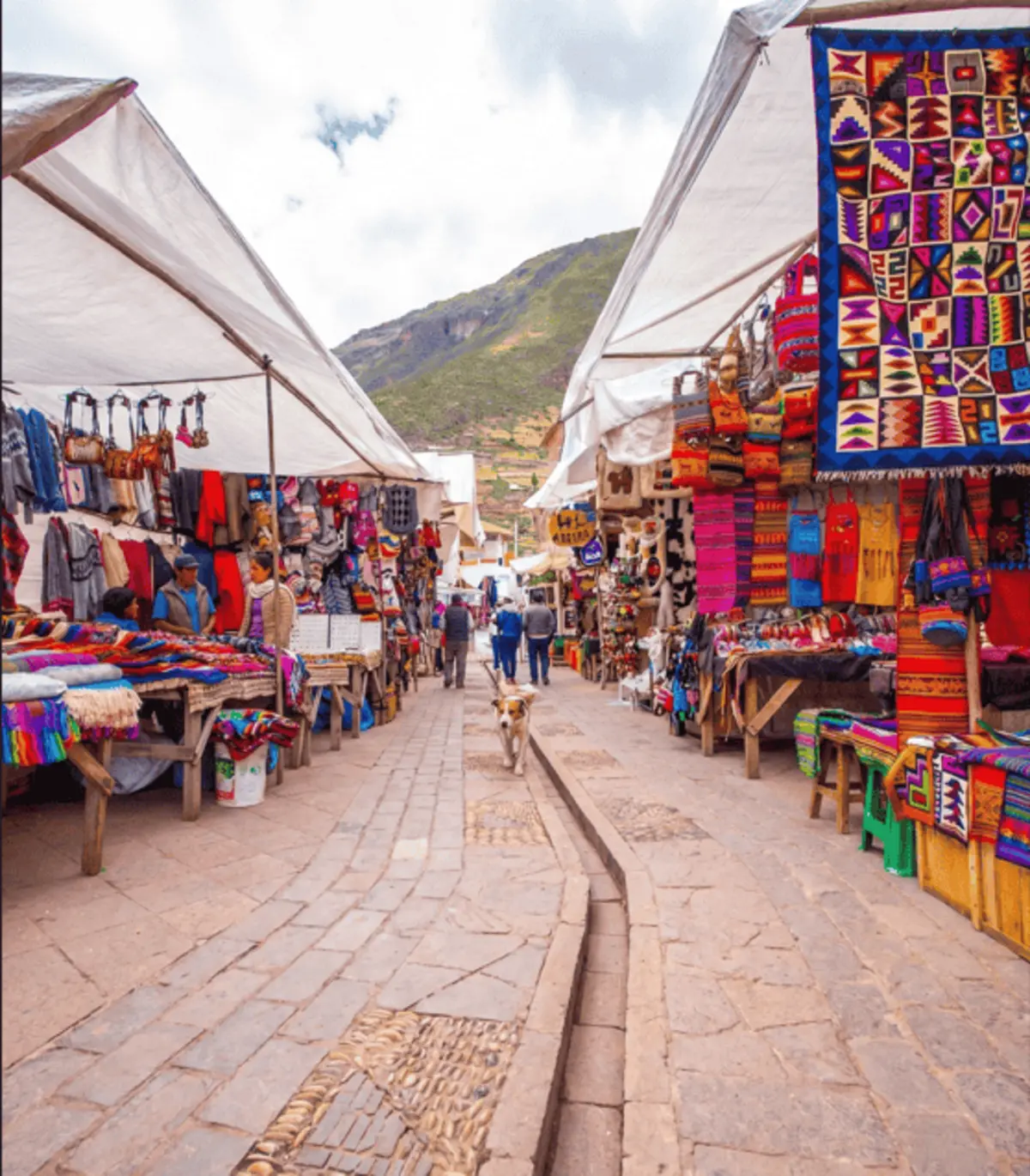
Leaving the city and venturing into the mystical Sacred Valley of the Incas, we arrive at Pisac. This is not just a food market; it is one of the most famous artisan fairs in South America. When tours to the markets in Cusco and its surroundings are organized, Pisac is always on the itinerary.
The Sunday Fair vs. The Daily Market
The market operates every day, but Sundays are special. On that day, the peasant communities from the highlands come down to the town in their most colorful traditional costumes to sell their agricultural products and exchange news. It is an impressive visual spectacle. The square fills with stalls and the Quechua language is heard in every corner.
World-Class Craftsmanship
If your goal is to buy high-quality souvenirs, Pisac is superior to many other markets in Cusco.
- Jewelry: Peruvian silver is famous for its quality and price. In Pisac, you will find artisans working silver with semi-precious stones and spondylus shells.
- Ceramics: The Toritos de Pucará, hand-painted plates, and replicas of Inca huacos abound here.
- Textiles: Rugs, alpaca chompas (sweaters), and tapestries with geometric designs that tell Andean stories.
Local Gastronomy
Do not fail to visit the food section to try the colonial oven empanadas. Pisac is famous for its ancient clay ovens where they cook empanadas filled with cheese, meat, or chicken, as well as roasted guinea pig (cuy al horno).
Location
Pisac is located about 40 minutes by car from the city of Cusco. It is the gateway to the Sacred Valley and can be reached by public transport (colectivos from Puputi street) or on a private tour.
5. Chinchero Market: Textiles and Ancestral Heritage
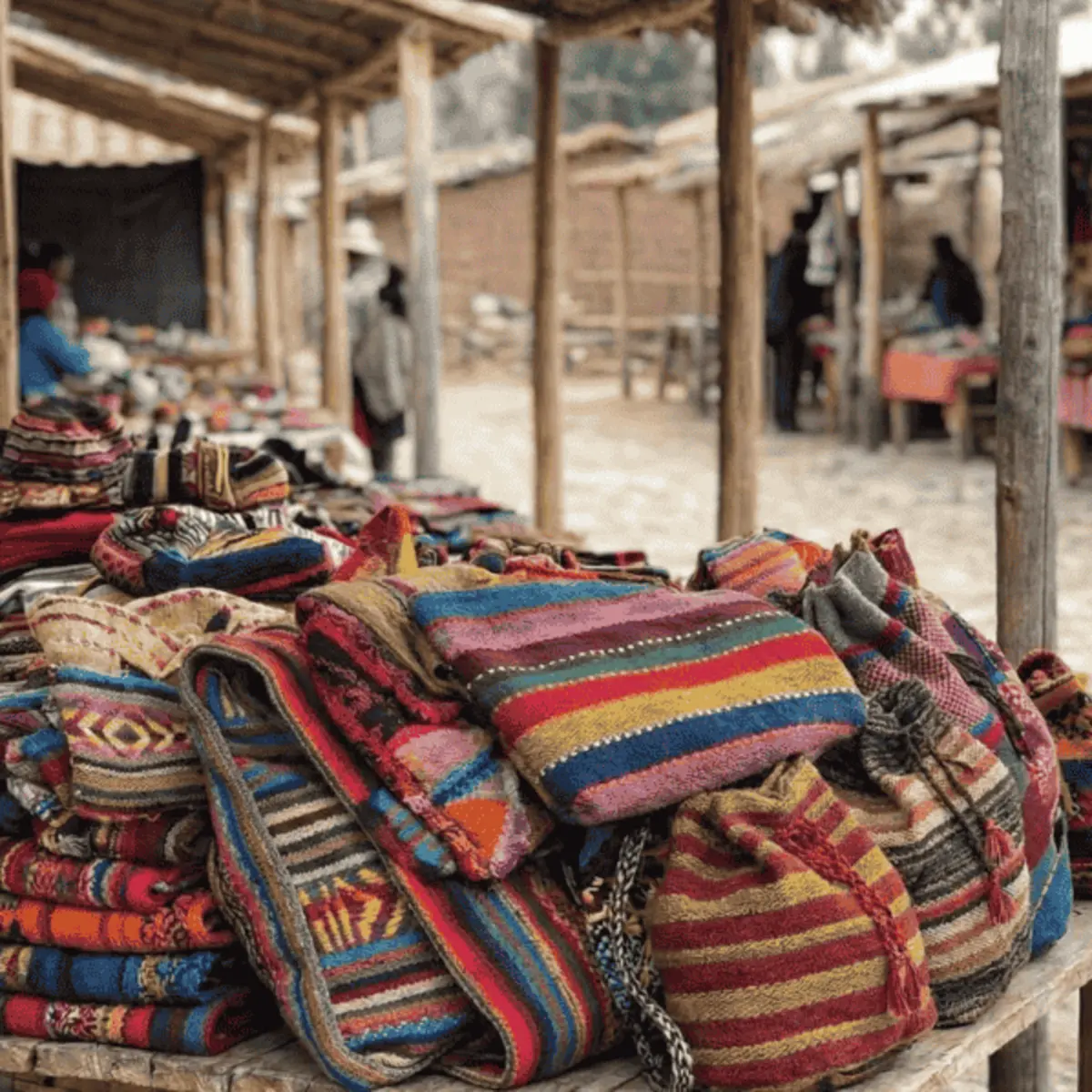
Chinchero is known as the town where the rainbow is born. Its market is unique because it specializes in the preservation of Inca textile techniques. Of all the markets in Cusco and the Sacred Valley, this is the one with the deepest cultural focus regarding the art of weaving.
The Art of Weaving
The main attraction here is not just buying, but seeing the process. The women of Chinchero are master weavers recognized worldwide. In the market and surrounding textile centers, they will show you how they shear the alpaca, how they wash the wool with “saqta” root (a natural detergent), and how they dye it using plants, flowers, and insects like the cochineal.
Traditional Barter
Although tourism has brought money, on market days (Tuesdays, Thursdays, and especially Sundays) it is still possible to observe barter (trueque) among local inhabitants in the produce area, a practice that has survived centuries and makes the markets in Cusco so special.
What to buy?
This is the place to invest in a piece of textile art. A table runner, a blanket, or a poncho bought in Chinchero is a garment that will last a lifetime. The designs are specific to the area and have profound meanings related to agriculture and Andean deities.
Location
Chinchero is about 30 km from Cusco, in a higher area (3,762 m.a.s.l.), on the route to Urubamba. The views of the Salkantay and Verónica snow-capped mountains from the market are simply breathtaking.
Expert Tips for Touring the Markets in Cusco
Visiting these places requires a bit of prior knowledge to enjoy them to the fullest and avoid inconveniences. Here is a series of recommendations to navigate the markets in Cusco like an expert.
1. Timing is Key
Life in the Andes starts early. To see the freshest products and the locals in their element, try to arrive between 7:00 a.m. and 9:00 a.m. By noon, many food stalls fill up and the experience can be a bit more chaotic.
2. Carry Cash and Small Change
Although modernity is advancing, cash is still king. The vast majority of stalls in the markets in Cusco do not accept credit cards. Make sure to carry Peruvian Soles, and preferably in small bills (of 10 and 20 soles) and coins. Paying for a 2-sol fruit with a 100-sol bill can be a problem for the vendor.
3. The Art of “Haggling”
Haggling (regateo)—negotiating the price—is common, especially in the craft and clothing sections. However, there is a fine line. Haggle with respect and always with a smile. Remember that for many artisans, this is their only livelihood. In food and vegetable stalls, prices are usually fixed and very cheap, so it is not customary to haggle there. In the markets in Cusco, sometimes it is better to ask for the “yapa” (a little extra for free) than to lower the price.
4. Watch Your Belongings
Markets are safe places, but crowds are the perfect scenario for carelessness. Wear your backpack on your front and do not display valuables unnecessarily. It is common sense applied to any crowded place in the world.
5. Health and Hygiene
Street and market food is delicious, but if your stomach is not accustomed, proceed with caution. Avoid raw unwashed vegetables and opt for cooked foods. Juices are safe as long as you see they use bottled or boiled water, or simply ask for juice from fruits that are peeled at the moment (orange, papaya, banana).
Star Products You Will Find in the Markets
To make your visit to the markets in Cusco complete, there are certain products you must look for and know:
- Pan Chuta: A giant, sweet bread with a slight anise flavor, typical of the town of Oropesa but sold in all markets.
- Queso Paria: The quintessential Andean cheese, fresh, pasteurized, and with the perfect saltiness.
- Maíz Morado: The base of the famous drink “Chicha Morada” (purple corn drink).
- Cacao Chuncho: Considered one of the best cacaos in the world, coming from the Cusco jungle (La Convención).
- Sal de Maras: The famous pink salt extracted from Inca salt mines, sold in bulk in the markets at very low prices.
Frequently Asked Questions about Markets in Cusco
Can I take photos inside the markets? Yes, it is a paradise for photographers. However, etiquette in the markets in Cusco dictates that you should always ask for permission before photographing a person directly, especially the “mamachas” (older women in traditional dress). Often they will ask for a tip or for you to buy something in exchange, which is fair.
Are they open every day? Urban markets like San Pedro, San Blas, and Wanchaq open every day, generally from 6:00 a.m. to 5:00 p.m. The markets in the Sacred Valley like Pisac and Chinchero also open daily, but their main days (fair days) are Sundays, Tuesdays, and Thursdays.
Is it a good idea to buy tours to visit the markets? For markets within the city (San Pedro, San Blas), you can go perfectly on your own. However, for Pisac and Chinchero, hiring a tour that includes transport and a guide is highly recommended to understand the historical context and optimize time.
Which market is best for buying souvenirs? If you are looking for variety and price in one place within the city, San Pedro is the option. If you are looking for artistic quality and fine textiles, the markets in Cusco located in the Sacred Valley (Pisac and Chinchero) are superior.
An Experience That Transforms Your Trip
Cusco is a city that captivates you. Its energy is difficult to describe with words, but easy to feel with the heart. By visiting the markets in Cusco, you are not just being a spectator; you become part of the social fabric of the city.
You see the smile of the juice vendor, smell the earth on the freshly harvested potatoes, listen to the mix of Spanish and Quechua, and taste flavors that have nourished this civilization for millennia. It is, without a doubt, one of the most authentic ways to do tourism.
Far from the coldness of a shopping mall, the markets in Cusco offer you human warmth. Every purchase comes with a story, every dish with a tradition.
Are you ready to experience Cusco with all your senses? Do not settle for seeing the city from a bus window. Dare to walk, taste, and discover. Peru is an infinite destination, and we are here to help you discover it in the safest and most memorable way.
We invite you to explore our exclusive packages to Peru, designed for travelers seeking authenticity and comfort. From the peaks of the Andes to the colorful aisles of the markets in Cusco, we have the perfect experience waiting for you. Contact us today and let’s start planning the trip of your life.
OUR TIKTOK ACCOUNT
BLOG HOME:
https://bestmachupicchutours.com/blog
VISIT OUR SOCIAL MEDIA:
https://www.facebook.com/infocusco